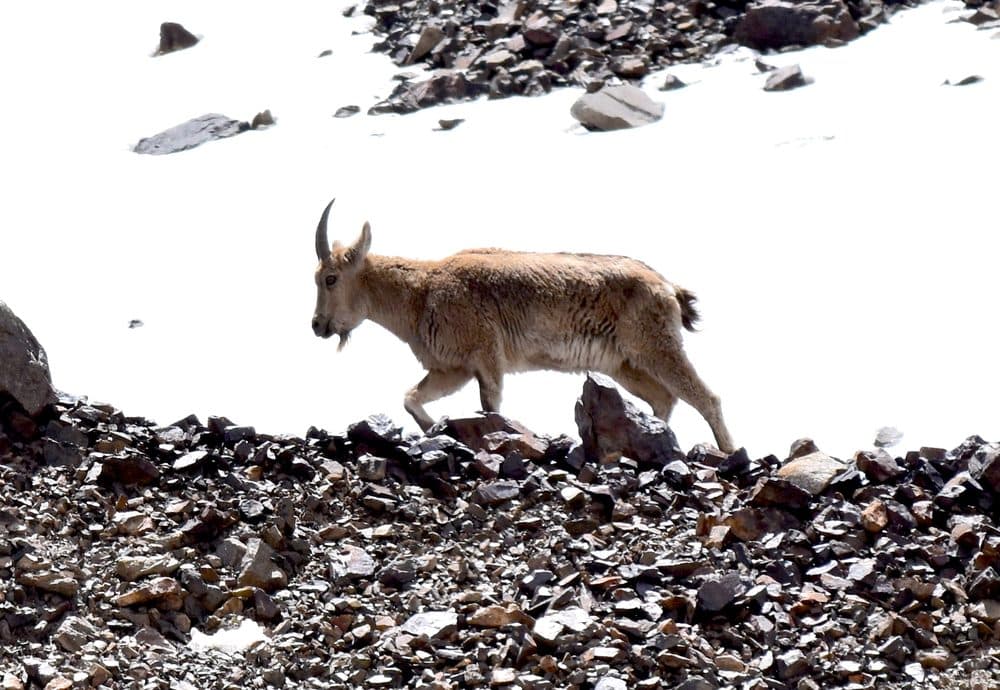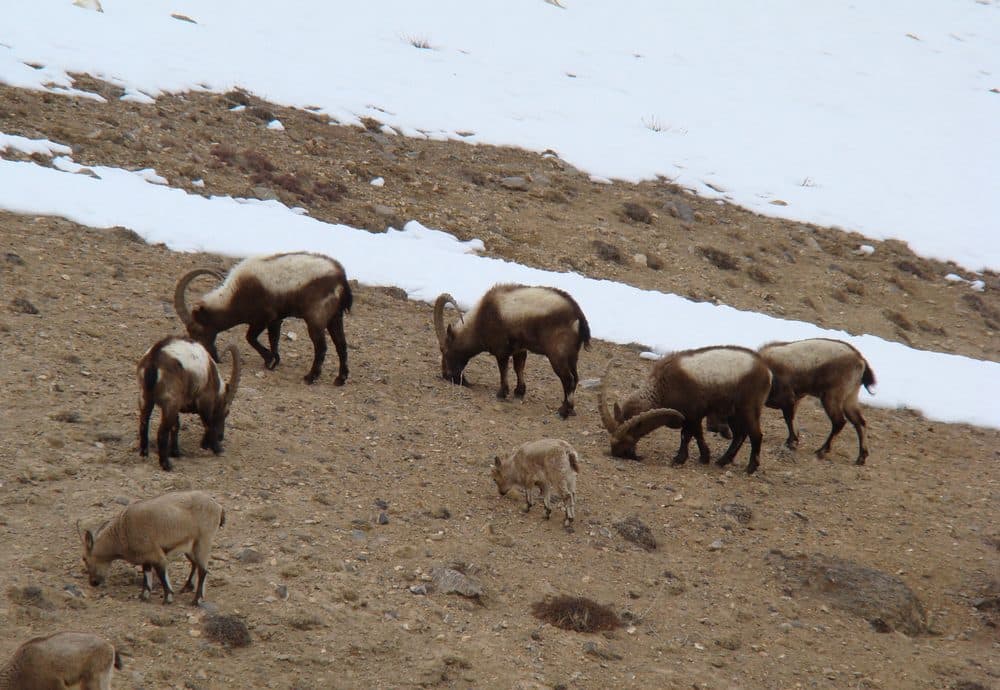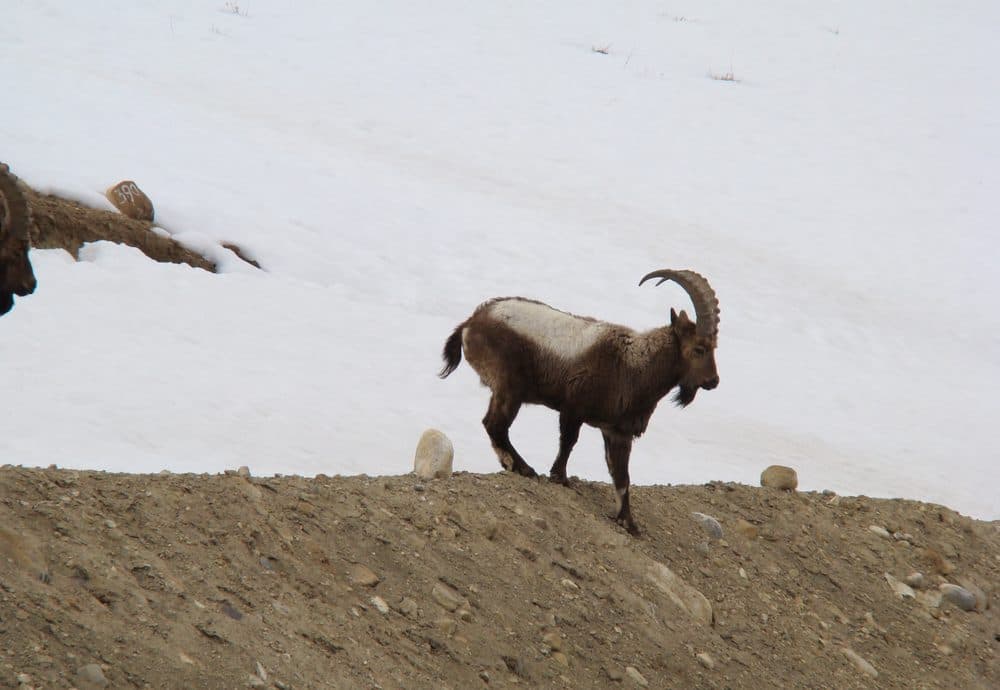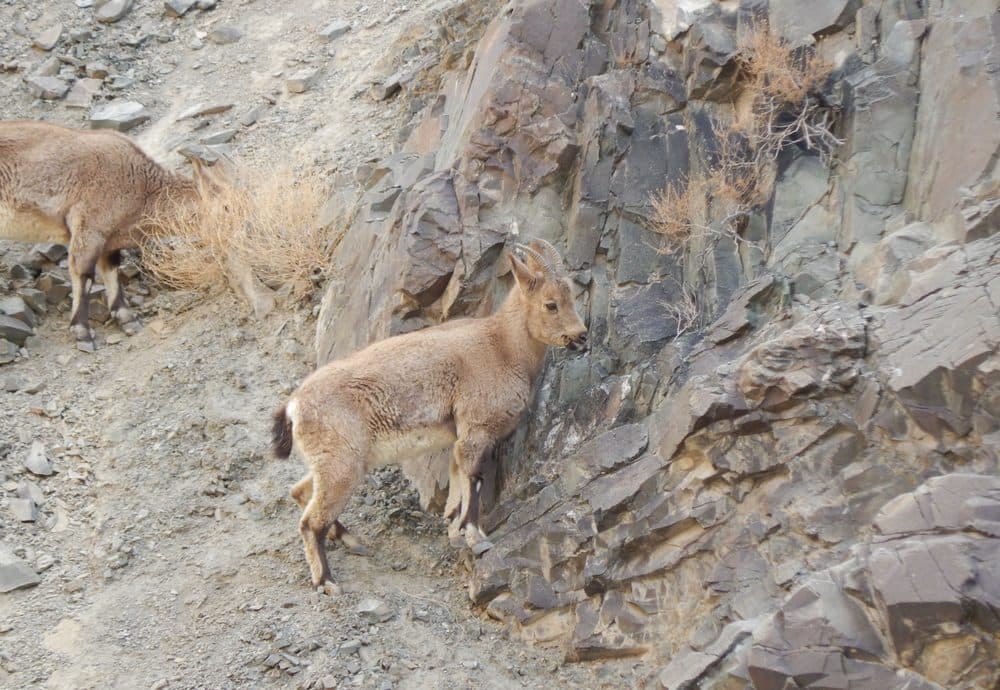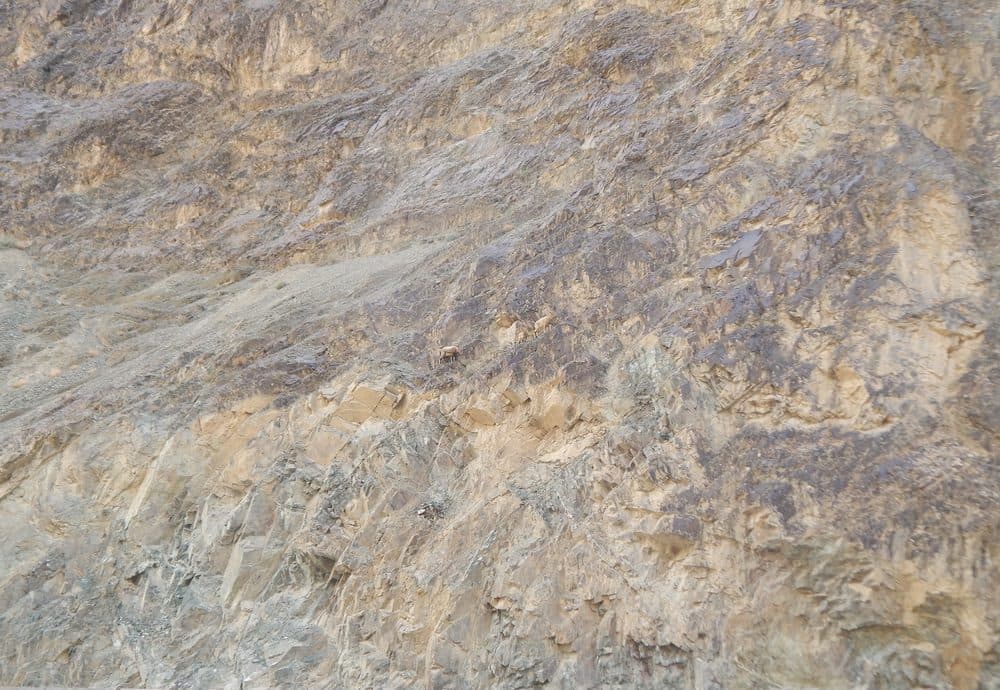

Free-ranging ibex above 4,000 metres
The Himalayan ibex (Capra sibirica) is the great mountain quarry of northern Pakistan — a heavy-horned wild goat that winters on the wind-scoured slopes where the Karakoram, Hindukush and Himalaya meet. This is a fair-chase hunt on foot: you glass from the valley at first light, pick a bull out of a herd that is almost invisible against the rock, and climb to him.
We operate inside Gilgit-Baltistan's community-managed conservancies, where trophy quotas are set annually by the wildlife department and the majority of every permit fee is returned to the villages that protect the herds. Forty years of that arrangement is the reason ibex numbers here are healthy enough to hunt at all.
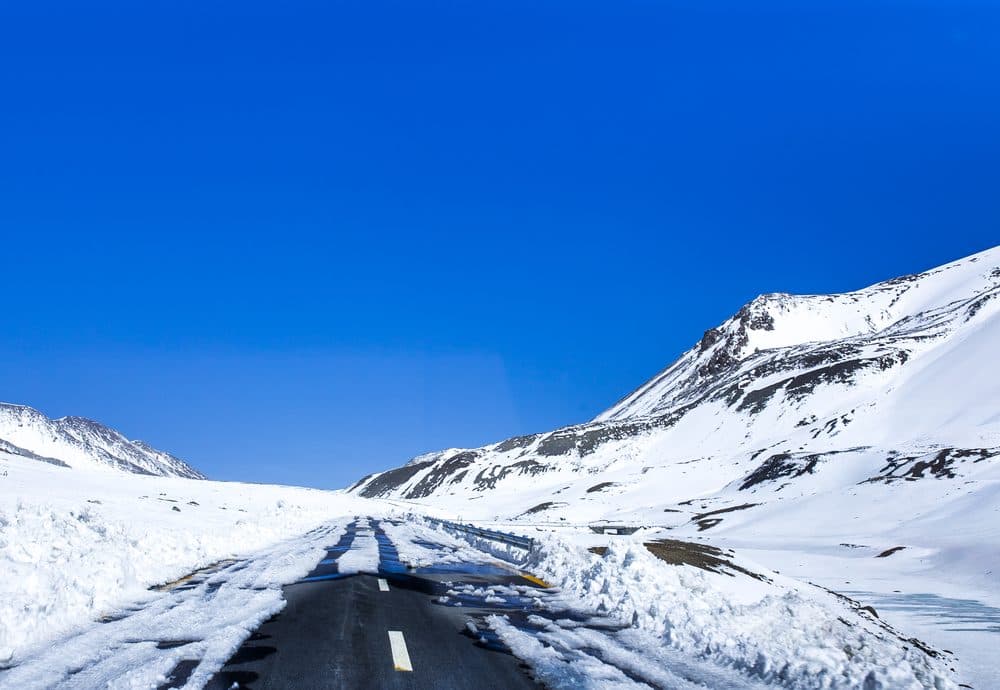
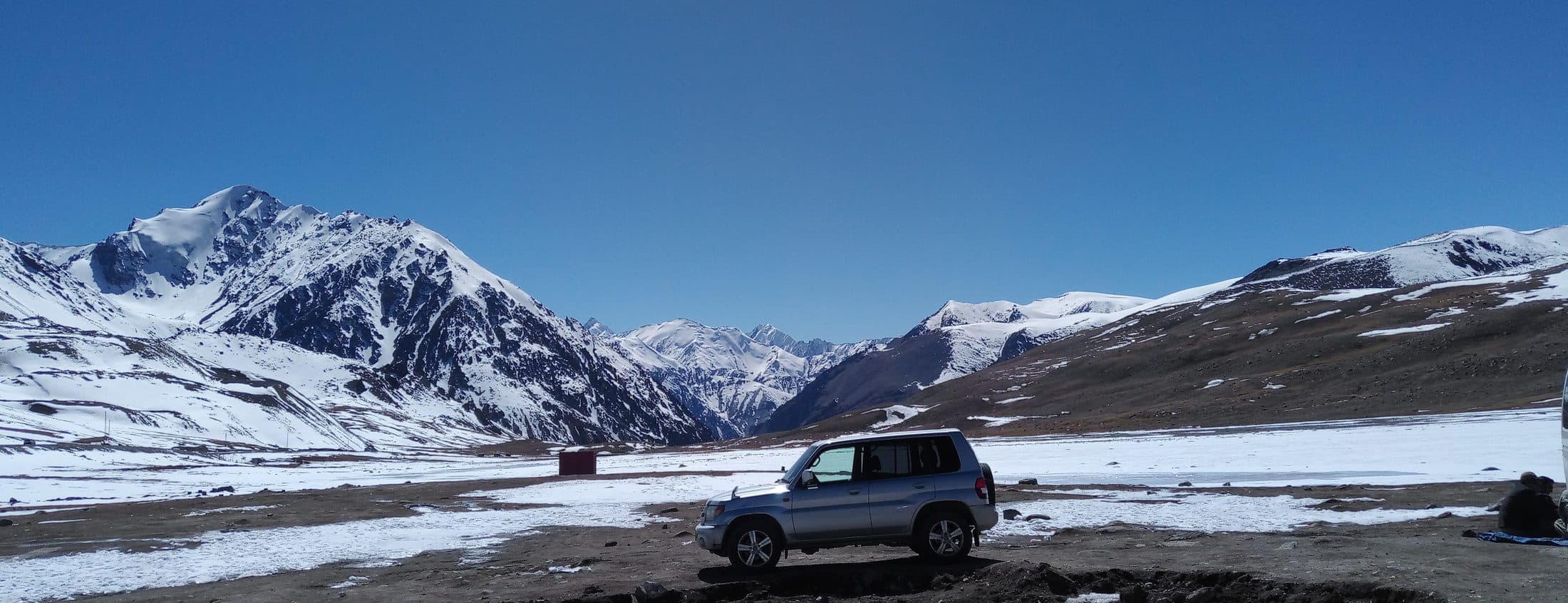
The package covers one hunter for nine days, with a professional hunter, local trackers and spotters, all camp logistics, the hunting licence and gun permits. Nights are spent in shepherd huts on the valley floor, with high-altitude tents carried for spike camps when the herds move high. It is a demanding trip — expect long days on steep ground between 3,000 and 4,500 metres in deep winter — but no technical climbing is involved.
- Fair-chase stalk for a mature free-ranging Himalayan ibex bull
- One hunter per package with a dedicated professional hunter and trackers
- Community conservancies where permit fees fund the villages protecting the herds
- Hunting licence, gun permits and field trophy preparation included
Standard itinerary
Hunting days are weather-dependent; the itinerary flexes around the herds.
- DAY01
Arrive Islamabad
540 mMeet on arrival at Islamabad International Airport and transfer to your hotel. Evening briefing on the conservancy, the quota and the week ahead.
- DAY02
Islamabad → Gilgit → Conservancy
2,400 mOne-hour morning flight to Gilgit, then roughly five hours by 4x4 up the valley to the conservancy base. Rifle check and zeroing on arrival.
- DAY03
Glassing & Acclimatisation
3,000 mA first full day on the glass with the spotters, locating herds and reading the ground. Short walks to settle into the altitude.
- DAY04
Hunting Day 1
3,600 mOut before dawn to glass the winter feeding slopes. Once a mature bull is identified, the stalk begins — often several hours of climbing on scree and snow.
- DAY05
Hunting Day 2
4,000 mWork a second drainage, moving higher as the herds shift with the sun. Spike camp is pitched if the ground demands it.
- DAY06
Hunting Day 3
4,200 mA full day in the high basins. Your professional hunter judges horn length and age before any shot is offered.
- DAY07
Hunting Day 4
4,500 mThe last of the high days, held in reserve for weather or for a bull already located and worth returning to.
- DAY08
Conservancy → Gilgit
1,500 mField preparation and measurement of the trophy, farewells in the village, then the drive back down to Gilgit for the night.
- DAY09
Gilgit → Islamabad · Departure
540 mMorning flight to Islamabad and transfer for your onward international connection.
Dates for 2026 / 27
| Ex-Islamabad | From | To | Duration |
|---|---|---|---|
| 1st Slot | 05 Oct 2026 | 13 Oct 2026 | 9d / 8n |
| 2nd Slot | 09 Nov 2026 | 17 Nov 2026 | 9d / 8n |
| 3rd Slot — Prime | 14 Dec 2026 | 22 Dec 2026 | 9d / 8n |
| 4th Slot — Prime | 28 Dec 2026 | 05 Jan 2027 | 9d / 8n |
| 5th Slot — Prime | 07 Jan 2027 | 15 Jan 2027 | 9d / 8n |
| 6th Slot | 15 Feb 2027 | 23 Feb 2027 | 9d / 8n |
| 7th Slot | 12 Apr 2027 | 20 Apr 2027 | 9d / 8n |
Additional information
USD 16,000 covers one hunter for nine days: the hunting licence and gun permits, all accommodation and meals including snacks and beverages, airport meet-and-greet and transfers, all ground transport within the territory, your professional hunter, trackers and spotters, and field preparation and measurement of the trophy.
Scenes from the trail