
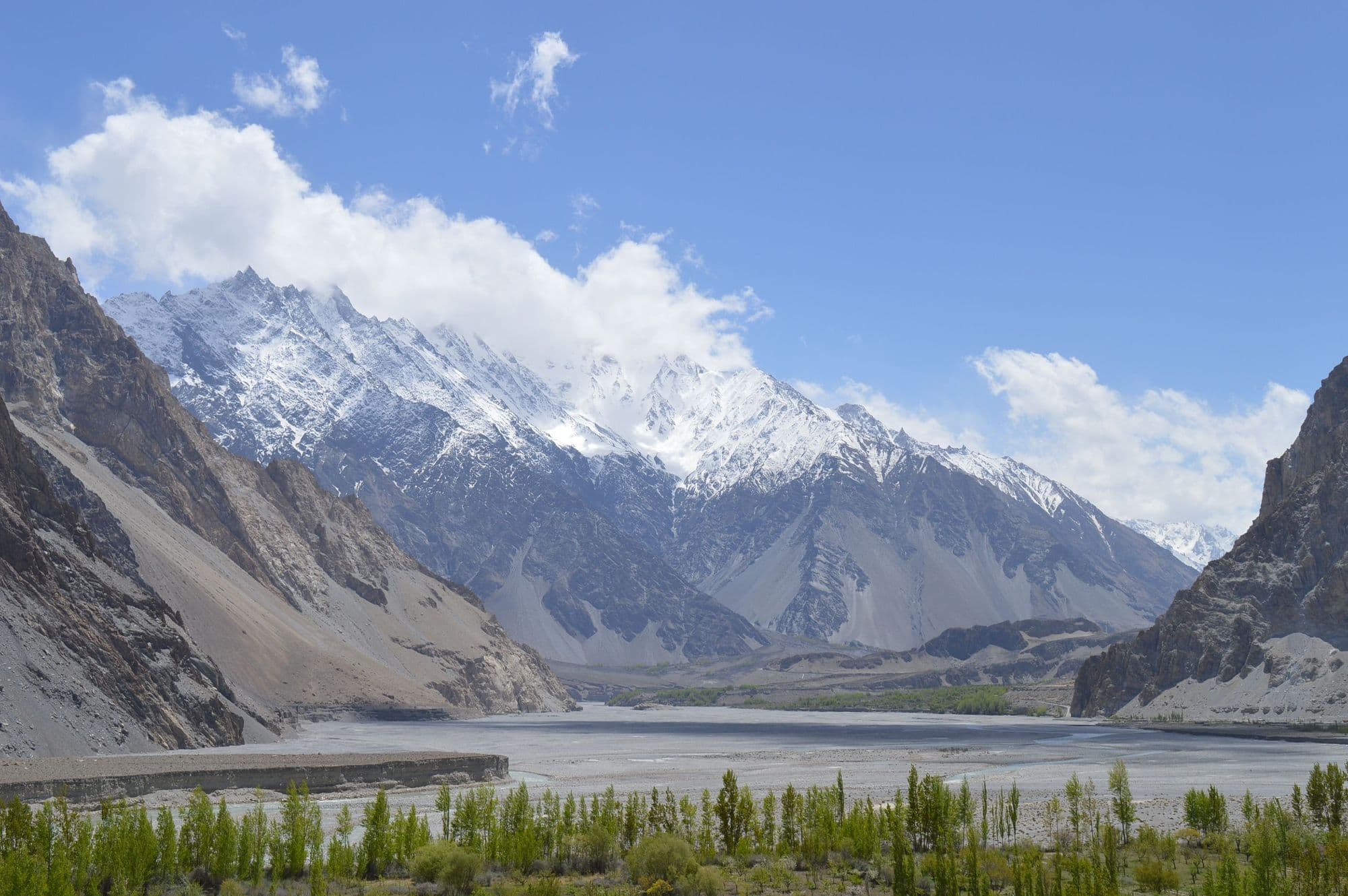
The short answer: come between April and October, and if you can choose, choose the second half of April for blossom, or the second half of October for autumn colour. Here is what every month actually feels like on the ground, because "April to October" hides a lot of difference between a cherry orchard in Karimabad and a frozen pass above Skardu.
I grew up watching these valleys change colour every year, and I now spend most of my time helping overseas travellers pick dates. The questions are always the same: when is the blossom, when do the roads close, will my flight go, will it be crowded. The temperatures below are planning ranges, not forecasts, and I have marked anything you should double-check close to your trip.
The four seasons in one paragraph
Spring (late March to May) is blossom and empty hotels. Summer (June to August) is warm, green and busy with Pakistani families, and the only season for high trekking. Autumn (mid-September to early November) is the clearest sky of the year and the gold and red of the orchards. Winter is quiet, cold and beautiful, with side roads and passes shut and flights the only reliable way in.
January and February: deep winter
Karimabad sits at roughly 2,440 m, and in January a typical day is around minus 3 °C with nights near minus 13 °C; February is a little milder at about 0 °C by day (Northern Discover, Hunza weather by month). Upper Hunza (Gulmit, Passu, Sost) runs 3 to 5 °C colder again. Skardu, in a wide basin at about 2,230 m, gets the same deep cold and more snow on the surrounding slopes.
In practice the Karakoram Highway usually stays open with icy sections, while side valleys such as Naltar and Hoper can be cut off after storms. The Babusar Pass is closed for the winter, so you reach the north by flying or by the long KKH drive through Besham and Chilas. Hotels that stay open are cheap and the valleys are silent. Bring proper winter layers; most guesthouses heat one room, not the whole building.
March: the thaw and the first blossom
Days climb to about 8 °C in Karimabad, nights still freeze. By the last ten days of March the first apricot and cherry trees open in lower Hunza (Aliabad, Karimabad, Altit) and in the lower villages around Skardu (Northern Discover). It is a quieter month than April, and if you only care about the earliest blossom and lower prices, late March is a clever choice. Roads are muddy where the snow has just gone, and Khunjerab is still closed to tourists (see April).
April: peak blossom
This is the month everyone photographs. Lower Hunza peaks from late March into the first ten days of April; upper Hunza (Gulmit and Passu) follows seven to ten days later, usually mid to late April (Northern Discover). The Skardu side, particularly Chunda valley and the orchards of Shigar, runs on a similar clock. Days reach around 15 °C and nights hover near 4 °C, so you still need a jacket at dawn.
April is also one of the two most booked-ahead months of the year, along with October. If you want Karimabad's better hotels, reserve months out. Khunjerab Pass has been formally kept open year-round for trade since December 2024 (Profit by Pakistan Today, 3 December 2024), but tourist access to the top in late winter and early spring still depends on snow clearance and can be stopped at short notice [confirm locally: whether the road above Sost is open to visitors on your dates].
May: green terraces, stable weather
Hunza turns from blossom to deep green. Days are about 20 °C, nights around 8 °C. May is my personal favourite for a first visit: the light is clear, the trails around Eagle's Nest (Duikar) and the Hoper glacier viewpoint are dry, and Pakistani school holidays have not yet begun. On the Skardu side, Deosai is not yet open (the plateau sits above 4,000 m and the roads stay snowbound), but Shigar, Khaplu and the Katpana dunes are all perfect.
June, July and August: summer and the domestic peak
These are the warmest months, with Karimabad days at roughly 24 to 27 °C and nights 12 to 14 °C (Northern Discover). It is also peak domestic season tied to Pakistani school holidays; Karimabad and Gulmit hotels fill fastest and prices are at their highest. Lonely Planet names June and July as the busiest months for accommodation (Lonely Planet, best time to visit Pakistan).
Summer is the only season for serious trekking. High passes are generally snow-free in July, and the long glacier routes such as our 20-day Snow Lake / Biafo-Hispar La trek run from late June into early September. Deosai National Park is at its best from June to September: wildflowers in June and July, then early colour and fewer people in September (GB Tourism Department). August brings a little more cloud and the occasional afternoon shower in the valleys; the monsoon mostly stays south of the Karakoram, but it does hit the roads between Islamabad and the north, so build in a buffer day. The last two weeks of August are usually quieter than the first two.
September: the clearest skies and the fewest crowds
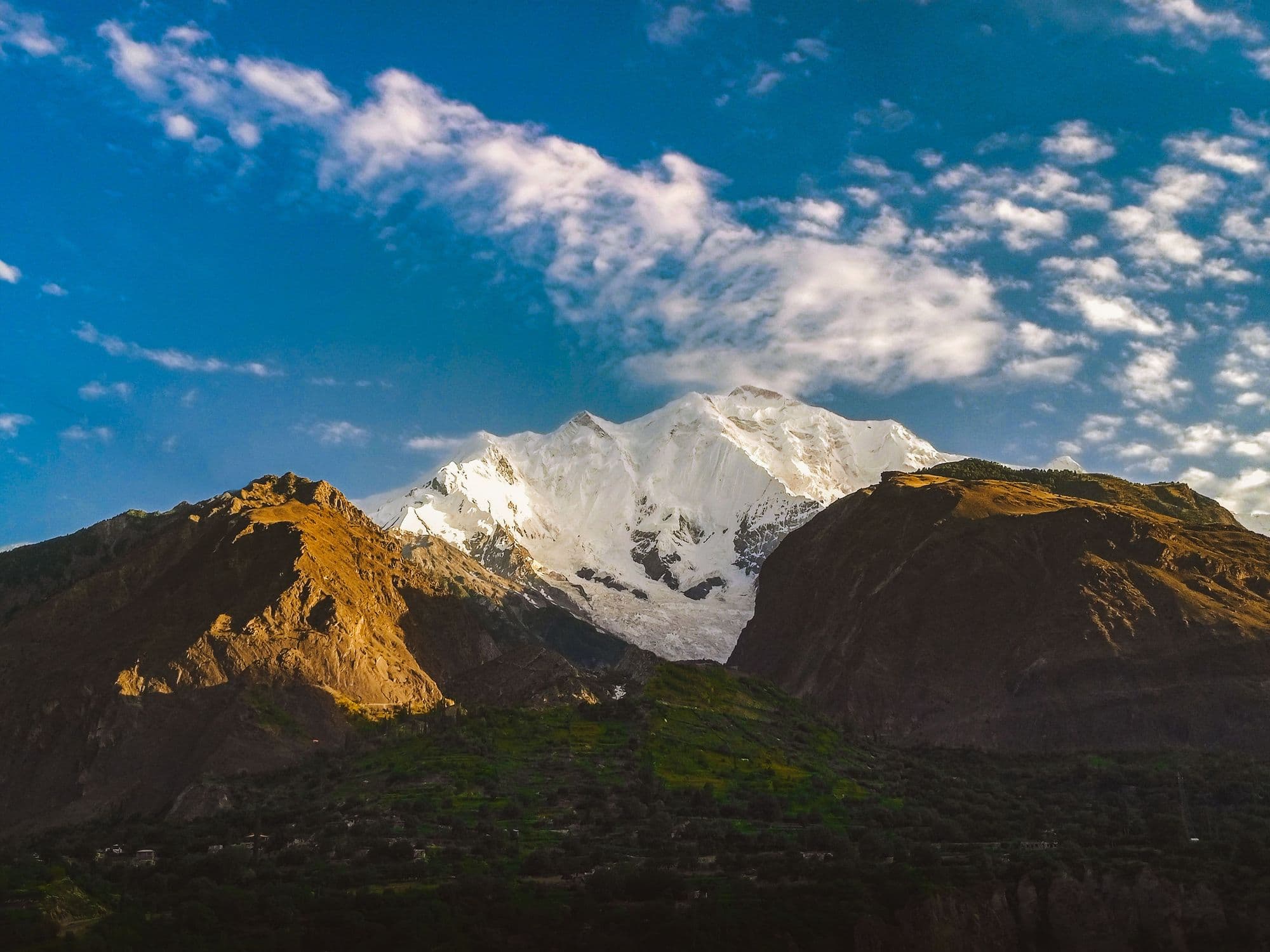
Clear skies return, days are around 20 °C and nights about 8 °C. The families have gone home, the glaciers are still open for short treks, and in the second half of the month the first poplars start to turn in upper Hunza. If you asked me for a single month that balances weather, crowds and price, it would be September. [owner: add a local detail here]
October: autumn colour
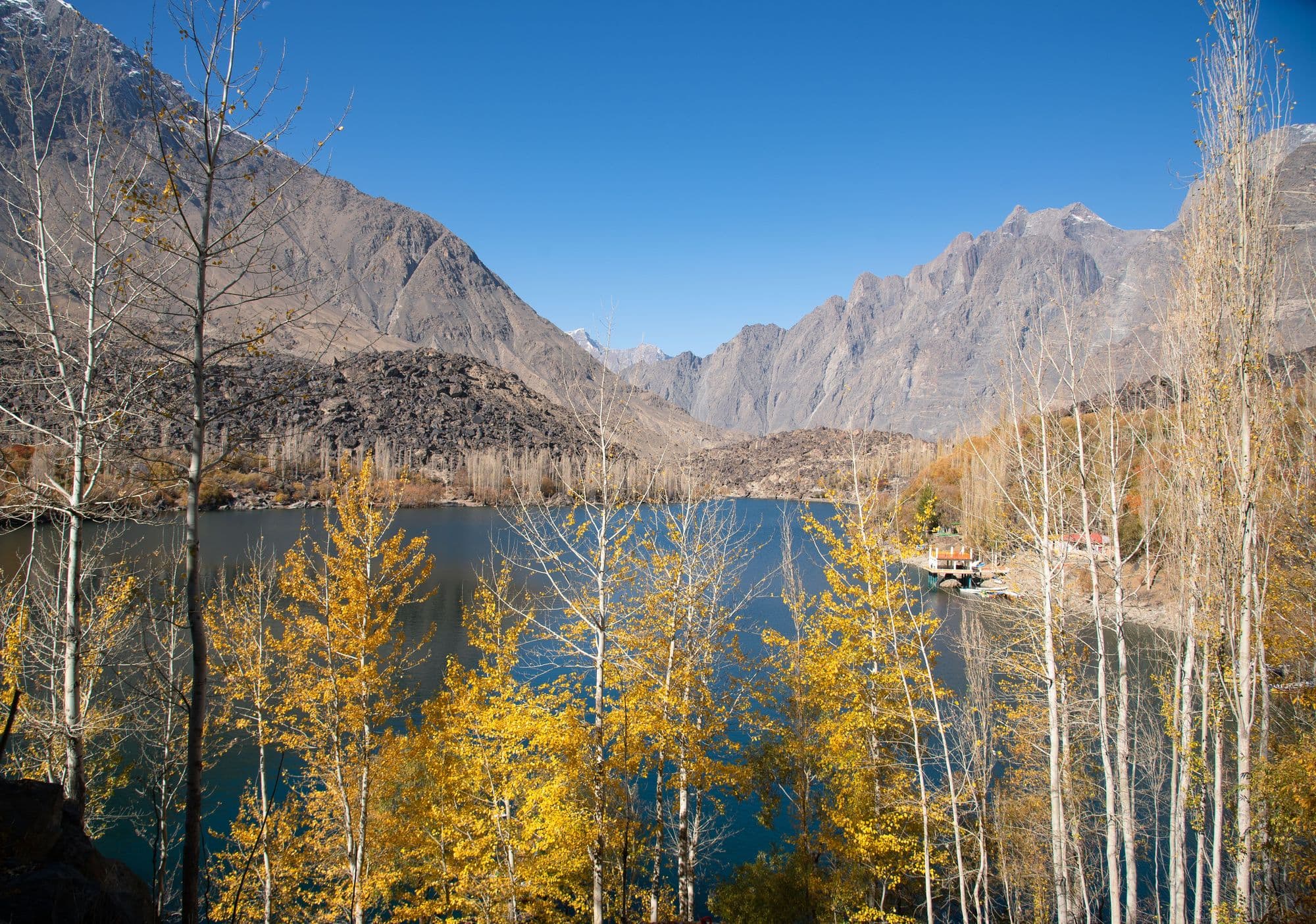
This is the second of the two months that book out early. Colour runs from upper Hunza downwards: Gulmit and Passu peak around mid-October, Karimabad and Altit around the last week of the month (Northern Discover). Dawn describes the valley's window as "October 15 to mid-November" (Dawn, 27 September 2024). On the Skardu side, Khaplu and Shigar turn in early October and the lakes at Kachura are at their best in the middle of the month (Gilgit-Baltistan Discoveries). Days are about 14 °C, nights around 3 °C, so you want a down jacket for sunrise at Duikar. We wrote a separate guide to exactly where to stand for the colours, which pairs with our 13-day Gilgit-Baltistan Autumn Tour.
Watch the Babusar Pass: it normally shuts with the first heavy snow, which can come as early as mid-October (in 2023 it closed on 14 October) (PakWheels, October 2023). After that, road travellers use the KKH via Chilas all year.
November: late colour, then the first snow
Early November is still golden in Karimabad and Nagar, and the crowds have gone. By the middle of the month the first heavy snow arrives at altitude and nights drop to about minus 3 °C. Side roads begin to close. Flights become the sensible way in and out, and they are more weather-prone, so leave a spare day at each end.
December: quiet and cold
Days around 0 °C, nights near minus 9 °C in Karimabad. Few visitors, very low prices, and only for people who like cold and are flexible about dates.
Flights and roads: what changes through the year
Islamabad to Skardu is flown by PIA and Airblue, roughly an hour in the air, at least daily in peak season and less often in winter; one-way economy fares have typically run from around PKR 12,000 to 40,000 depending on timing (Northern Discover, Skardu flight schedule 2026) [confirm locally: current fares and days of operation]. Airblue also runs Lahore to Skardu several times a week. Weather is the main reason for cancellations, and it happens even when the rest of the country is clear, so never put a flight to Skardu the day before an international departure.
By road, the Babusar route from Naran is the scenic summer short cut (open roughly June or July to October, snow permitting), while the Karakoram Highway through Besham and Chilas runs all year with occasional closures for landslides or works. The 85 km from Sost to the Khunjerab Pass (4,693 m) is open to visitors in the warm months; the Pakistani side has historically operated weekdays only (Visit Silk Road, Khunjerab Pass) [confirm locally: current opening days and the national park fee].
How to choose your month
If blossom is the point, book the second and third weeks of April and sleep in Karimabad. If autumn is the point, book the third and fourth weeks of October and split your nights between Gulmit and Karimabad. If you want trekking, it must be July or August. If you want the best all-round value, September. If you want to see Lahore and Islamabad as well, October and November are the months when the plains are pleasant and the mountains still open, which is why our 13-day Ultimate Pakistan Tour runs in those months.
Want a date-by-date plan with flights and buffers built in? Download our free Pakistan Trip Planner 2027 or ask us for a custom itinerary and tell us which of these months you have in mind.
Ready to pick your dates? Request a custom itinerary and we will match the month to what you want to see.
Photo credits: hero Photo: Amjad Ali / Pexels; in-body Photo: Wasif Mehmood / Pexels, Photo: Adnan Temur Barcha / Pexels, Photo: Najmul Hasan / Pexels. All used under the Pexels licence.
FAQ
For most people, October, for the colours and clear air; for blossom, the second half of April. September is the quietest of the good months.
Yes. The Karakoram Highway stays open with icy sections, hotels are cheap and the valleys are empty, but side roads and the Babusar Pass close and flights are weather-dependent.
Normally with the first heavy snow in October or November, reopening around June or July. In 2023 it closed on 14 October, so do not rely on it for a late-October road trip.
Roughly June to September. June and July are the wildflower months; September has autumn colour and fewer visitors.
For April and October, yes; those are the two months that sell out first. For June to August, book early for Karimabad and Gulmit because of domestic holidays. Other months are easy.
Take the next step
Get the free Pakistan Trip Planner 2027, or tell us your dates and we will cost a private itinerary around them.
Comments (0)
No comments yet — be the first to share your thoughts.