
Hunza is the easiest place in northern Pakistan to travel with children: a compact, green valley at a sensible altitude, with short walks, boats, glaciers you can touch and a culture that treats other people's kids as its own. The itinerary below is six days from Gilgit airport, paced for families with children from about four to fourteen, with the two things I would skip with very young ones marked clearly.
I grew up in Hunza and I now write for Third Pole Adventures, so I spend my summers watching other people's families discover the places I took for granted. I have seen a seven-year-old from Manchester negotiate for apricots in Karimabad bazaar, and a family drive straight to the 4,693-metre Khunjerab Pass on their second day and spend the night with a vomiting child. This guide is written so that your trip looks like the first and not the second.
Why Hunza works for families (and the one thing to respect)
Karimabad, where most families stay, sits at roughly 2,400 metres, high enough to notice on the first evening and low enough that healthy children adjust within a day [confirm locally: exact village altitude figure you prefer to quote]. Distances are short: Attabad Lake is under an hour away, Passu is a morning's drive, and the forts and bazaar are a walk from most hotels. Hunza is also, in my experience, the safest-feeling part of Pakistan for a family, with almost no traffic in the villages.
The one thing to respect is altitude. Paediatric altitude guidance summarised by Dr Paul Auerbach from Yaron and Niermeyer's review in High Altitude Medicine & Biology says the signs of acute mountain sickness in children are irritability, low energy, poor appetite, nausea, vomiting and poor sleep; the advice is to ascend slowly, stop climbing if symptoms appear and descend, and to keep babies under about six weeks away from altitude altogether (Outdoor Ed summary). In practice that means: sleep in Karimabad or Gulmit, never higher, and treat the Khunjerab Pass as an optional round trip for older children only. Talk to your own doctor before you fly.
Getting there without exhausting anyone
Fly Islamabad to Gilgit, about an hour and usually under USD 90 one way, as the travel writers at Sailing Stone noted in their May 2026 Passu guide, then drive the Karakoram Highway to Karimabad in around two and a half to three hours. The flight is often cancelled by weather, so we book families a spare night in Islamabad on the way home and never a same-day international connection. The overland bus from Rawalpindi takes 18 to 24 hours; I would not do it with children. Our flight versus road guide applies equally to Gilgit.
One honest note on the road: a magnitude 5.8 earthquake on 19 January 2026, centred near Chipursan in upper Gojal, killed one person and blocked the highway between Nagar and Khunjerab for a time before it reopened (Dawn). Travel with a driver who knows which stretches to pass early in the day.
The six-day Hunza family itinerary
Day 1: Gilgit to Karimabad. Land, drive, stop at the Rakaposhi viewpoint in Ghulmet for tea and the first jaw-drop, and arrive in Karimabad by early afternoon. Do nothing more than walk the bazaar and let the children find the shop that sells apricot kernels and dried mulberries. Early dinner, early bed.
Day 2: Baltit Fort, Altit Fort and the water channels. Baltit Fort, about 700 years old in its oldest parts and restored by the Aga Khan Trust for Culture, is open daily from 9 am to 5 pm in summer and 9:30 am to 4 pm in winter; foreign visitors pay PKR 1,200 and Pakistanis PKR 600 to 1,000 depending on which 2025 to 2026 price list you read (Graana; Nature Adventure Club) [confirm locally: 2027 ticket prices]. Children love the fort because it is a maze of ladders, low doors and roof terraces. Walk down through Baltit village along the irrigation channels to Altit Fort, older and lower, with a garden where small children can run and a cafe run by the women of the village; the same list gives PKR 650 for Pakistanis and PKR 1,650 for foreigners [confirm locally].
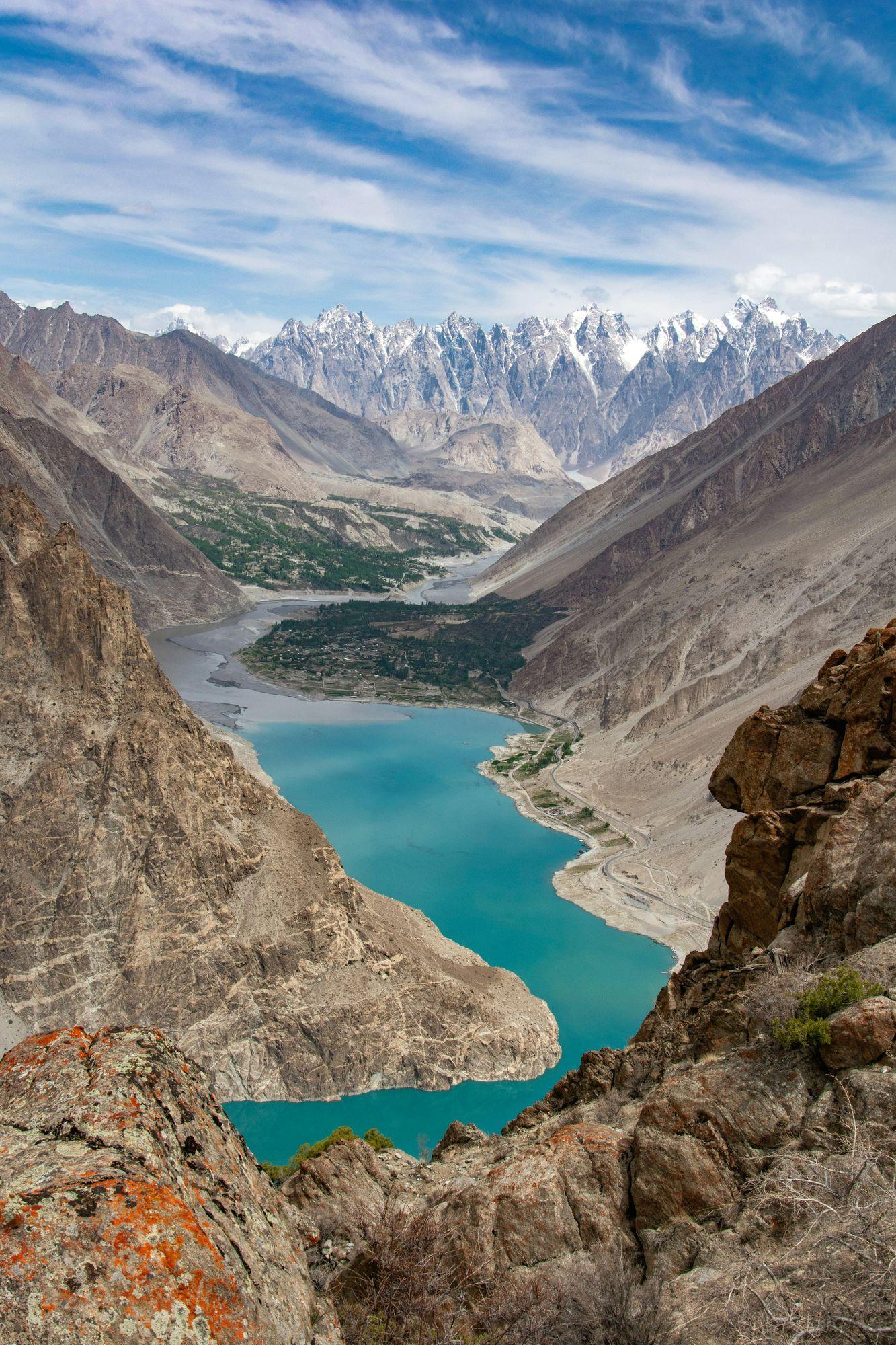
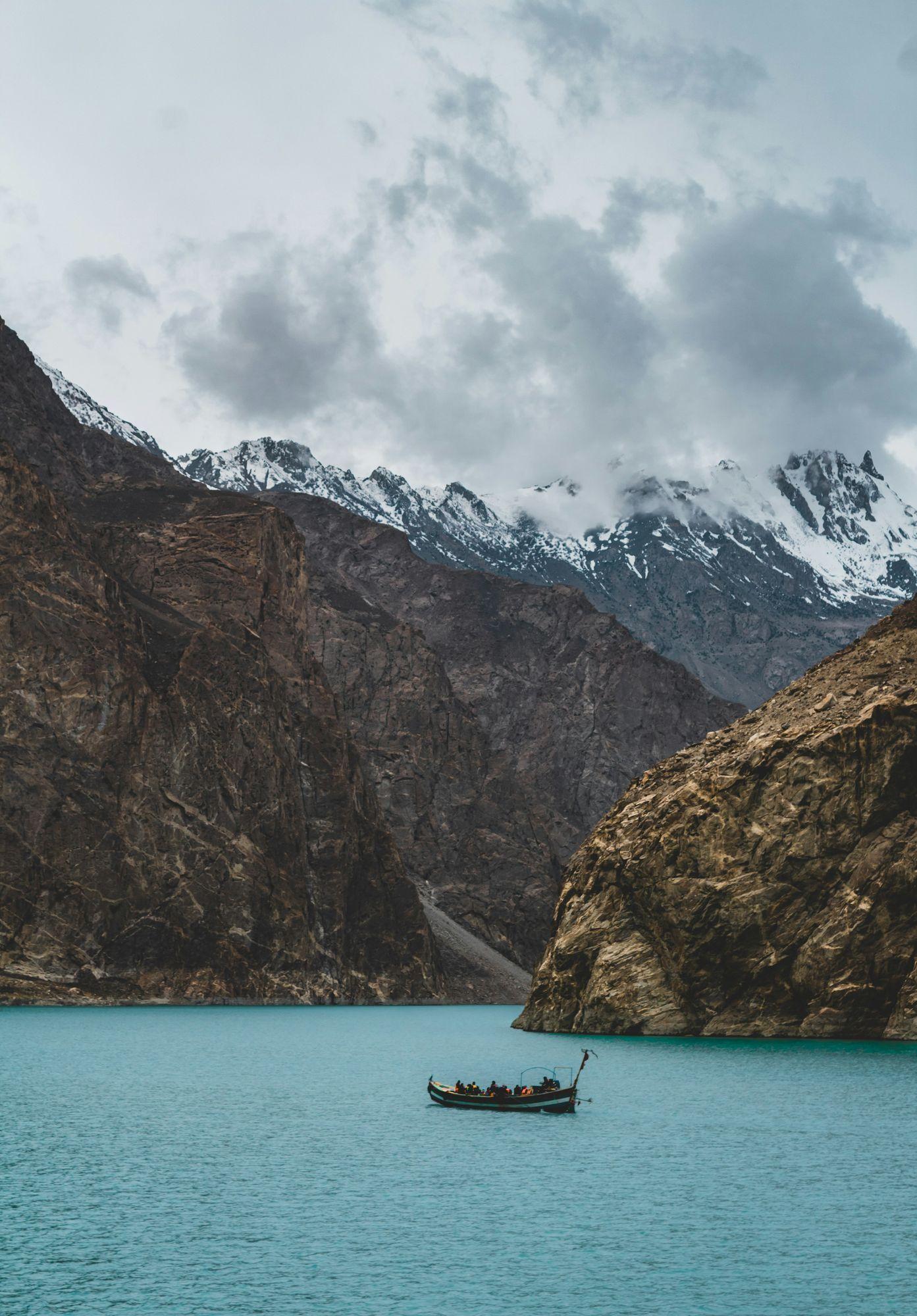
Day 3: Attabad Lake and the Hussaini bridge. Drive north through the tunnels to Attabad, the turquoise lake that formed when a landslide blocked the Hunza river in 2010. A full motor boat for a group costs in the region of PKR 2,500 to 3,500 and a jet-ski ride around PKR 1,500 to 2,000 per person, according to the 2026 Nature Adventure Club price notes, which themselves quote two different figures (Nature Adventure Club) [confirm locally: current boat rates at Attabad]. Life jackets are provided; make sure the children wear them. Continue to the Hussaini suspension bridge, 193 metres of planks and cable over the Hunza river, ticket PKR 300, life vest included, first built in 1968 and renovated in 1983 and 2012 (Sailing Stone, May 2026). It is a thrill for a confident ten-year-old and a bad idea for a nervous six-year-old or anyone with a fear of heights, as the Sailing Stone writers warn; one parent can walk it while the other has tea with the little ones at the stall by the ticket office.
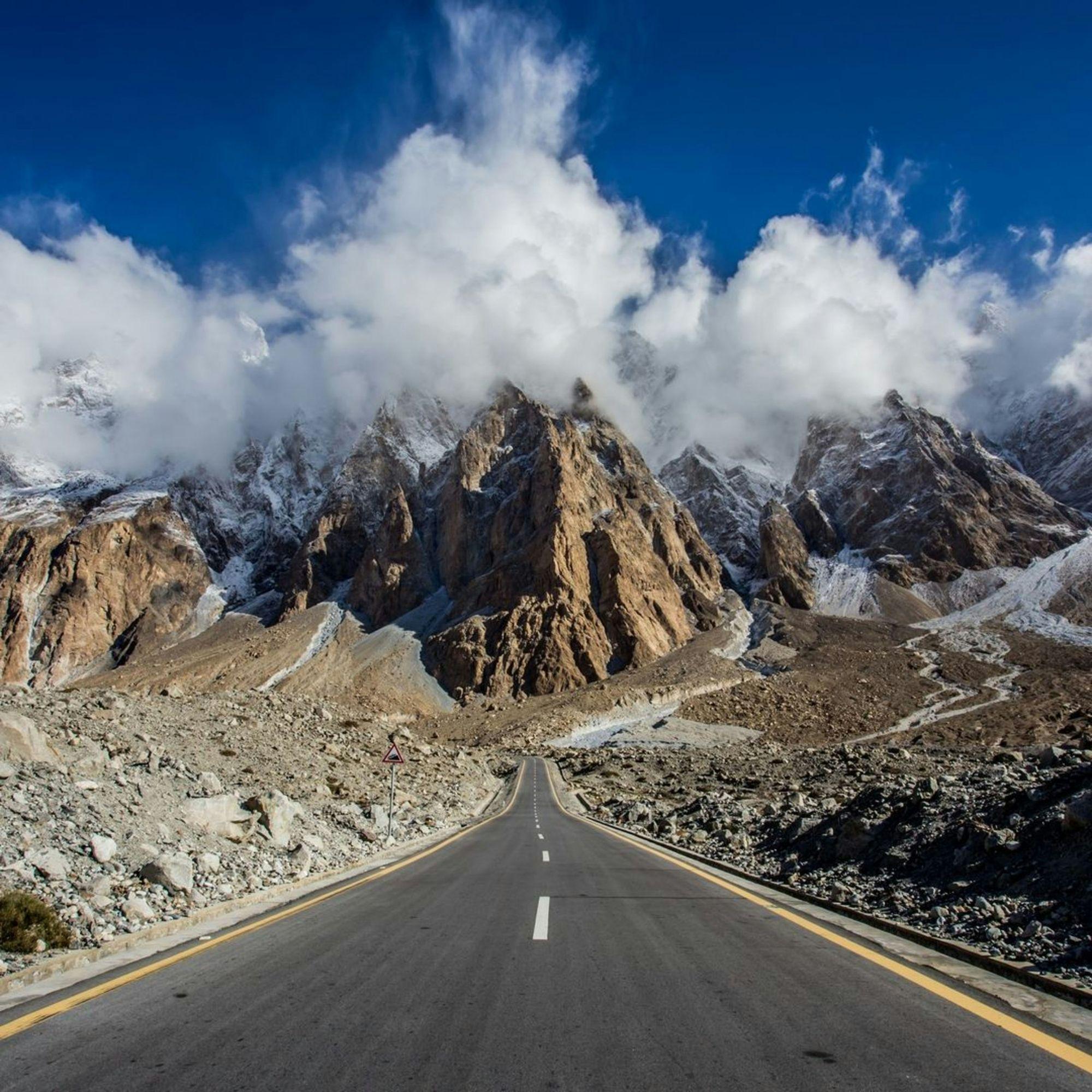
Day 4: Passu glacier, Passu Cones and Borith Lake. The Passu Cones, the jagged spires that reach about 6,000 metres above the highway, are the view every child remembers. From the Passu suspension bridge a short, flat walk leads toward the snout of the Passu glacier, which is about 20 kilometres long (Sailing Stone); the family-travel writer Evie Farrell lists it among her family-friendly Hunza walks but also calls the final approach risky, and I agree: go close enough to see the ice, not to stand on it. Borith Lake on the way back is a quiet picnic spot. A private car for the Passu day cost the Sailing Stone writers PKR 8,000 in spring 2026 [confirm locally: 2027 day-hire rate from Karimabad].
Day 5: Hoper glacier walk and Eagle's Nest sunset. Hoper in Nagar, about 30 minutes from Karimabad, has the easiest glacier walk in the region: two to three hours over fields and village paths with no steep sections, and villagers who hand children mulberries and apricots in season (Mumpack Travel, September 2025). Late afternoon, drive 15 kilometres and 30 to 40 minutes up the paved road to Duikar, at about 2,850 metres, where the Eagle's Nest viewpoint shows Rakaposhi, Ultar Sar and, on a clear day, the Passu Cones (GB Tourism Department). Stay for the stars if the children are still awake, and drive down with a driver who does this road nightly.
Day 6: Karimabad to Gilgit, or the Khunjerab option. With children under eight, spend the last morning in Karimabad bazaar and drive to Gilgit. With older, well-acclimatised children, the alternative is a long day to the Khunjerab Pass at 4,693 metres, the highest paved border crossing in the world (Wikipedia). The national park charges an entry fee (a 2022 list gives PKR 500 for Pakistanis and PKR 12,000 for foreigners) and the pass is closed from December to the end of March (Nature Adventure Club) [confirm locally: 2027 Khunjerab fees]. Spend no more than half an hour at the top, watch for the signs above, and sleep back down in Karimabad or Gulmit. We build this choice into our Gilgit-Baltistan Autumn Tour.
Practical things parents ask me
Food. Hunza food is mild: chapshuro (a meat-filled flatbread), dowdo (hand-cut noodle soup), rice, lentils, fresh apricots and walnuts. Children eat well here. Bring the snacks they cannot live without; the bazaar sells biscuits and crisps and little else they will recognise.
Health. Bottled water, hand gel, sun hats and SPF 50 because the sun at 2,400 metres burns fast, and a kit with rehydration salts and children's paracetamol. The nearest proper hospital is in Gilgit, two to three hours away, so insurance with evacuation cover matters. The health section of our packing list applies.
Hotels. Karimabad or Altit for the first nights, Gulmit for a night in Gojal. Ask for family rooms; most mid-range hotels have them. Expect simple, clean and friendly rather than slick [confirm locally: the two or three hotels you recommend to families and their 2027 rates].
Dress and manners. Hunza is relaxed, but covered shoulders and knees is right for adults in the villages, and a scarf is handy for women entering the forts' mosques. Nobody expects anything of children except that they say hello back.
Paperwork. Foreign nationals register with the local authorities on arrival in Gilgit-Baltistan, which your hotel or operator handles. No permits are needed for this itinerary; our permits guide covers what changes if you add a trek.
[owner: add a local detail here, for example the Karimabad family who let children help pick apricots in July, or the Altit cafe's walnut cake]
When to bring the family
April and May for blossom and mild days; late June to August for the school holidays and the apricot harvest, with more Pakistani families on the road; September and October for the colours and the clearest skies. Avoid December to March with children: the Khunjerab Pass is closed and heating in hotels is patchy. Our month-by-month guide has the detail, and our guide to Hunza in autumn says exactly where to stand.
Frequently asked questions
Yes. Hunza is calm, friendly and low-crime, with almost no traffic in the villages. The government advisories that matter concern the Karakoram Highway south of Chilas, not Hunza itself; fly to Gilgit and drive the last stretch by day.
From about four upward is comfortable: old enough for short walks and boat rides, and past the age where altitude is hardest to read. Babies under six weeks should not go to altitude at all. Teenagers love it.
Older, acclimatised children can, as a short round trip from Karimabad or Gulmit after at least three nights at lower altitude. Keep it to half an hour at the top and descend at the first sign of headache, nausea or unusual tiredness. Skip it with under-eights.
Six days from Gilgit covers the forts, Attabad Lake, Passu, Hoper and Eagle's Nest at a child's pace. Add two if you want to combine it with Skardu, or one spare day for a cancelled flight.
It is well maintained, you are given a life vest and the ticket is PKR 300, but it is 193 metres of gapped planks over a cold river. Fine for confident children of about ten and up with an adult; not for nervous or very small children.
Let us plan it around your children
Download our free Pakistan Trip Planner 2027 for this itinerary as a day-by-day sheet with a family packing list. If your children are younger, older or you have a grandparent coming too, request a custom itinerary and we will adjust the pace. Families who want more than Hunza usually choose the 13-day Ultimate Pakistan Tour, and when the children are grown there is always the Snow Lake trek.
Photo credits: Attabad Lake: The Hunzai Lad / Unsplash (Unsplash Licence). Boat on Attabad Lake: Umar Farooq / Unsplash (Unsplash Licence). Passu Cones: Jessica Anderson / Unsplash (Unsplash Licence). Hunza valley aerial: Mehtab Farooq / Unsplash (Unsplash Licence).
Take the next step
Get the free Pakistan Trip Planner 2027, or tell us your dates and we will cost a private itinerary around them.
Comments (0)
No comments yet — be the first to share your thoughts.