Most treks in Gilgit-Baltistan need no permit at all, only a valid visa; the exceptions are the restricted zone from Askole up the Baltoro to K2, Broad Peak, the Gasherbrums and Gondogoro La, any peak above 6,500 m, and a few border-sensitive routes. For those, a licensed operator files the paperwork for you, and the whole process takes four to six weeks, so start early.
I have filed permit paperwork in Skardu and Gilgit for fifteen seasons, and the question I am asked most by email is some version of "do I need an NOC?". The honest answer is that it depends entirely on where you want to walk, and the rules have been argued over in court for the last two years, so anyone quoting you a fixed fee with total confidence is guessing a little. This is how it actually works, as of this autumn, with the places I am unsure about marked clearly.
The three zones: open, restricted, closed
Gilgit-Baltistan divides its trekking country into three categories, and your paperwork follows the category, not the trek's fame (Pakistan Mountaineering Club; Skardu Trekkers).
Open zone. No trekking permit and no mandatory guide, though a guide is strongly advised. This covers most of the classic routes: Fairy Meadows and Nanga Parbat base camp, Rakaposhi base camp, Patundas above Passu, the Deosai plateau, the Hushe valley walks, Thalle La between Shigar and Khaplu, and nearly everything in Hunza and Nagar. You may pay a small local or park fee at a gate; think a few dollars, or a national park ticket at Deosai and Khunjerab.
Restricted zone. A formal trekking permit, a licensed guide or liaison officer, and insurance are required, and the file goes through an operator. The line starts at Askole in Shigar District and takes in the Baltoro glacier, Concordia, K2, Broad Peak and Gasherbrum base camps, and the Gondogoro La crossing into Hushe (Trango Adventure). Anything near the Line of Control or the Afghan border is also treated as restricted or worse.
Closed zone. No trekking, no exceptions. These are the sensitive border strips, and no operator can get you in.
Snow Lake and the Biafo-Hispar traverse sit in an awkward place. The Biafo starts at Askole, the same village as the Baltoro, and you pass the same check post, but the route runs north away from the Baltoro. Historically it has been handled as an open-zone trek with registration at Askole [confirm locally: current treatment of the Biafo-Hispar route at the Askole check post, which has varied]. Our Snow Lake / Biafo-Hispar La Trek page is kept current on this.
The trekking visa, and why it matters more than the permit
Pakistan issues a specific visa category called Mountaineering and Trekking through the online portal at visa.nadra.gov.pk (Skardu Trekkers). For most foreign trekkers this is the single most important piece of paper, for a reason that surprises people: for the route named on your application, the trekking visa itself serves as the trekking permit (Trango Adventure; Skardu Trekkers). You still pay the zone fees on arrival, but there is no second permit document to chase.
To apply you need a passport with at least six months' validity, a photo, an invitation letter from a tour operator licensed by the Department of Tourist Services, and, for restricted routes, a signed restricted-area form (Skardu Trekkers). The visa is normally valid for 30 days and can be extended once you are in the country. Processing is quoted at up to four weeks, and if your route needs security clearance the total can stretch to six weeks or longer, so I tell clients to have everything with me by the end of March for a July trek. Indian and Taiwanese passport holders cannot use the portal and must apply through an embassy.
If you are coming for an ordinary trip with an open-zone walk thrown in, the standard tourist e-visa is enough; we walked through that in Pakistan tourist visa: e-visa step by step.
What an NOC is, and who actually needs one
NOC stands for No Objection Certificate. It is the security clearance that sits behind a restricted-zone permit. You cannot apply for it yourself: the operator submits the permit and NOC file to the Gilgit-Baltistan Council Secretariat, and clearance can take anywhere from a week to two months (Skardu Trekkers).
You need one for the Baltoro and K2 region from Askole onward, for Concordia and the Gasherbrum and Broad Peak approaches, for any peak above 6,500 m anywhere in the territory, and for routes near sensitive borders. You do not need one for Hunza, Skardu town, Deosai, Fairy Meadows, Khaplu or Shandur. The general NOC that all foreigners once needed to enter Gilgit-Baltistan was withdrawn by the federal interior ministry in 2017 (Pakistan Tour n Travel); you still register your passport at police check posts on the way, which takes two minutes.
For K2 base camp there is also a mandatory briefing before you set off, and you are expected to stay on the approved route and register at each check post (Skardu Trekkers).
What the fees are, honestly
This is where I have to be careful. In 2024 the Gilgit-Baltistan government passed a Finance Act that raised trekking fees and mountaineering royalties for foreigners by about 300 per cent and pushed the Central Karakoram National Park environmental fee to as much as 300 dollars per person. In February 2025 the GB Chief Court suspended the increases after the Pakistan Association of Tour Operators challenged them, and for a stretch of that spring no permits were being issued at all while the department and the operators argued over which rates applied (Dawn, 1 March 2025; Dawn, 29 April 2025). Published operator tables still differ as a result. The figures below are the ones currently being quoted by Skardu operators, and every one of them should be read with the court case in mind.
| Item | Who pays | Typical figure quoted for 2026–27 | Source | | --- | --- | --- | --- | | Open-zone trek | Everyone | No permit; local or park fees of a few dollars to about USD 20 | PMC | | Restricted-zone trekking permit | Foreigners | USD 150 per person per month in summer, USD 75 in autumn and winter (an older table shows USD 50) | Trango Adventure; Hunza Guides | | Restricted-zone trekking permit | Pakistani nationals | PKR 15,000 summer, 10,000 autumn, 5,000 winter | Trango Adventure | | CKNP waste and environment fee | Everyone in the park | About USD 190–200 per person; raised to up to USD 300 under the suspended Act | Trango Adventure; Dawn | | Peak royalty, under 6,500 m | Climbers | Nil, but a permit is still needed above 6,500 m everywhere | Hunza Guides | | Peak royalty, K2 | Climbers | One 2026–27 table quotes USD 3,500 per person in summer; a 2024 table quotes USD 12,000 for a team of up to seven | Trango Adventure; Hunza Guides |
[confirm locally: the fee schedule actually being applied by the GB Tourism Department for the 2027 season, once the court case is settled]. We quote our treks with the higher figure and refund the difference if the department charges less, which is the only fair way to do it while the rules are moving. For a full costed example see How much does a K2 base camp trek cost?.
Insurance is not optional in the restricted zone. Before a permit is issued the operator has to show expedition-member insurance, guide and liaison officer insurance, porter insurance and a written undertaking covering rescue (Trango Adventure). Your own travel policy must cover trekking to the altitude of your route, which for Concordia and Gondogoro La means above 5,000 m, and helicopter evacuation, which here is paid in advance.
How the process runs, step by step
- Choose your route and dates. The zone decides everything after this.
- Send us your passport scan, a photo and your home address (three to four months before an open-zone trip, four to five for the restricted zone).
- We issue the invitation letter and, for restricted routes, the area form, and you apply on the NADRA portal under Mountaineering and Trekking, or under Tourist for open-zone trips.
- We lodge the permit and NOC file with the GB Council Secretariat and chase it. If the portal sends your application back for review you have seven days to resubmit before it lapses (Skardu Trekkers).
- On arrival in Skardu you pay the CKNP and zone fees, attend the K2 briefing if your route needs it, and sign the register at Askole.
- On the trail your guide handles each check post; keep your passport and visa printout in a dry bag.
Who should bother with the restricted zone
If this is your first trip to Pakistan and you have two weeks, you do not need the restricted zone at all. Fairy Meadows, Rakaposhi, Patundas, Deosai and the Hushe valley give you the Karakoram without a single form, and our Gilgit-Baltistan Autumn Tour and Ultimate Pakistan Tour are built entirely on open-zone ground. The Baltoro is for people who have decided they want Concordia, have three weeks, and can live with the paperwork. Roughly 25,000 foreign tourists visited Gilgit-Baltistan in 2024 and only about 2,300 of them held trekking or climbing permits (Dawn); the other 22,000 had a wonderful time without one.
[owner: add a local detail here, for example the morning the Askole register ran out of pages, or what the K2 briefing in Skardu is actually like]
Let us do the forms
Nobody enjoys this part, and we have the relationships in Gilgit and Skardu to make it move. Tell us the route and we will tell you, in one email, which zone it is in, which visa category to use, what the fees will be at the higher and lower figures, and the date by which we need your documents.
Download the free Pakistan Trip Planner 2027, which has a one-page permit checklist: Pakistan Trip Planner 2027.
Request a custom itinerary and we will file the permits as part of it: Customise your tour.
Frequently asked questions
Only in the restricted zone: Askole onward up the Baltoro to K2, Broad Peak and Gasherbrum base camps, Gondogoro La, any peak above 6,500 m, and border-sensitive routes. Fairy Meadows, Rakaposhi, Deosai, Hushe and all of Hunza are open zone and need no permit.
A No Objection Certificate is the security clearance behind a restricted-zone permit. Your licensed operator files it with the Gilgit-Baltistan Council Secretariat; you cannot apply yourself. Allow one to eight weeks.
Operators are quoting about USD 150 per person for the restricted-zone permit plus roughly USD 190–200 for the Central Karakoram National Park fee, but a 2024 fee increase is suspended by the GB Chief Court and the final schedule is still unsettled. Budget for the higher figure.
Up to four weeks for the visa alone, and four to six weeks or more when restricted-zone clearance is included. Apply three to five months before you travel.
No. That general requirement was withdrawn in 2017. You register your passport at police check posts on the way, which takes a couple of minutes.
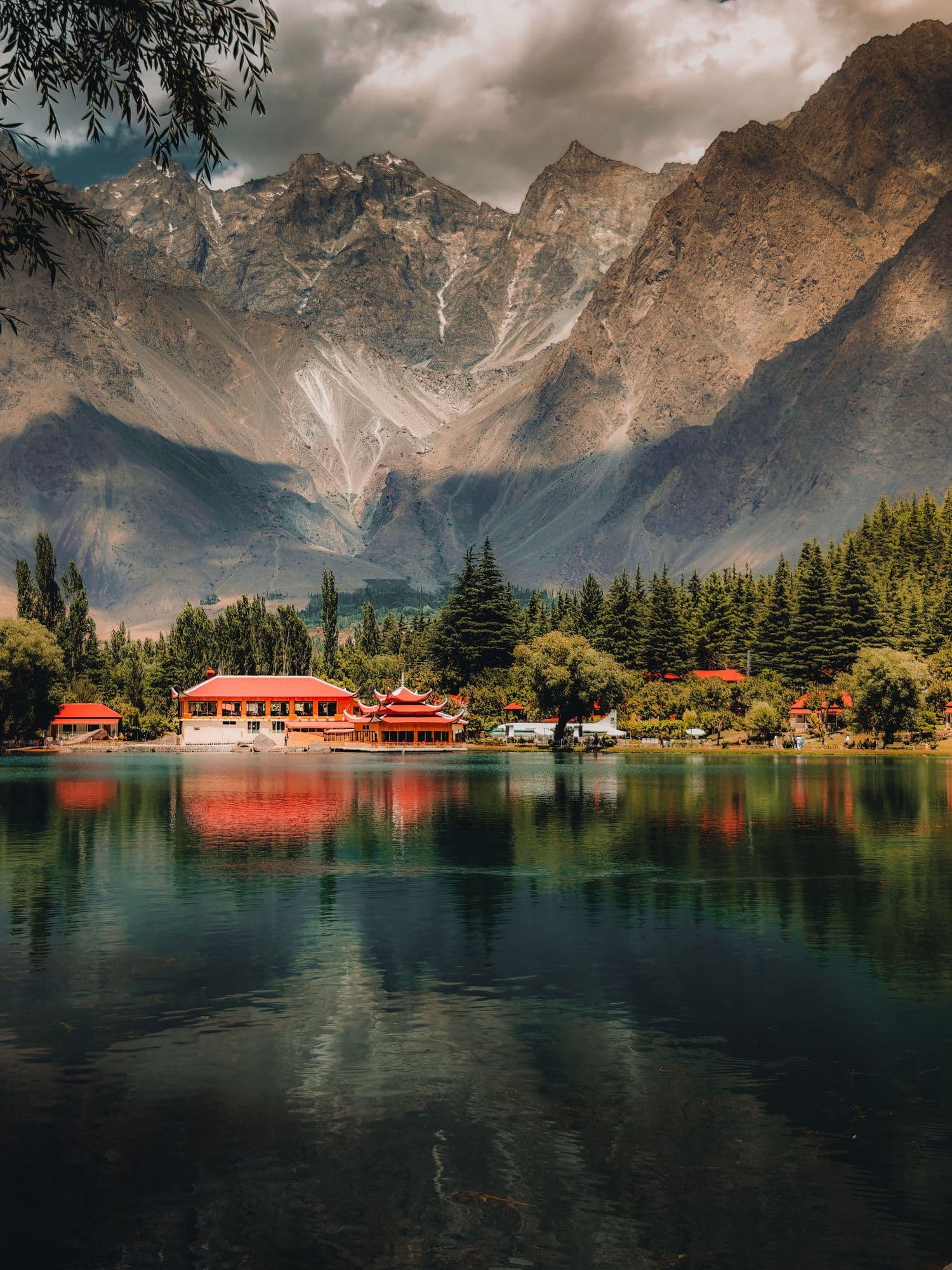
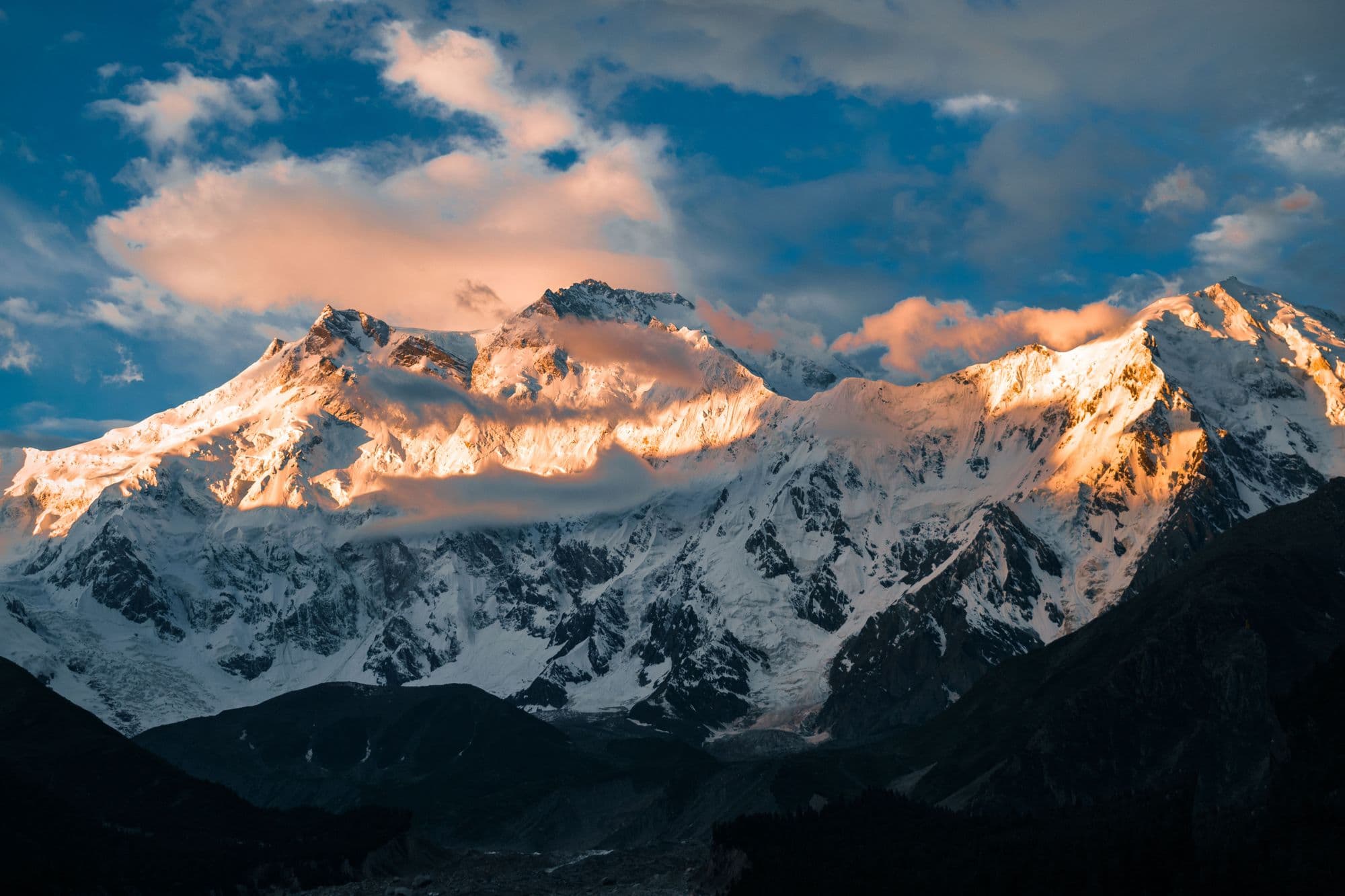
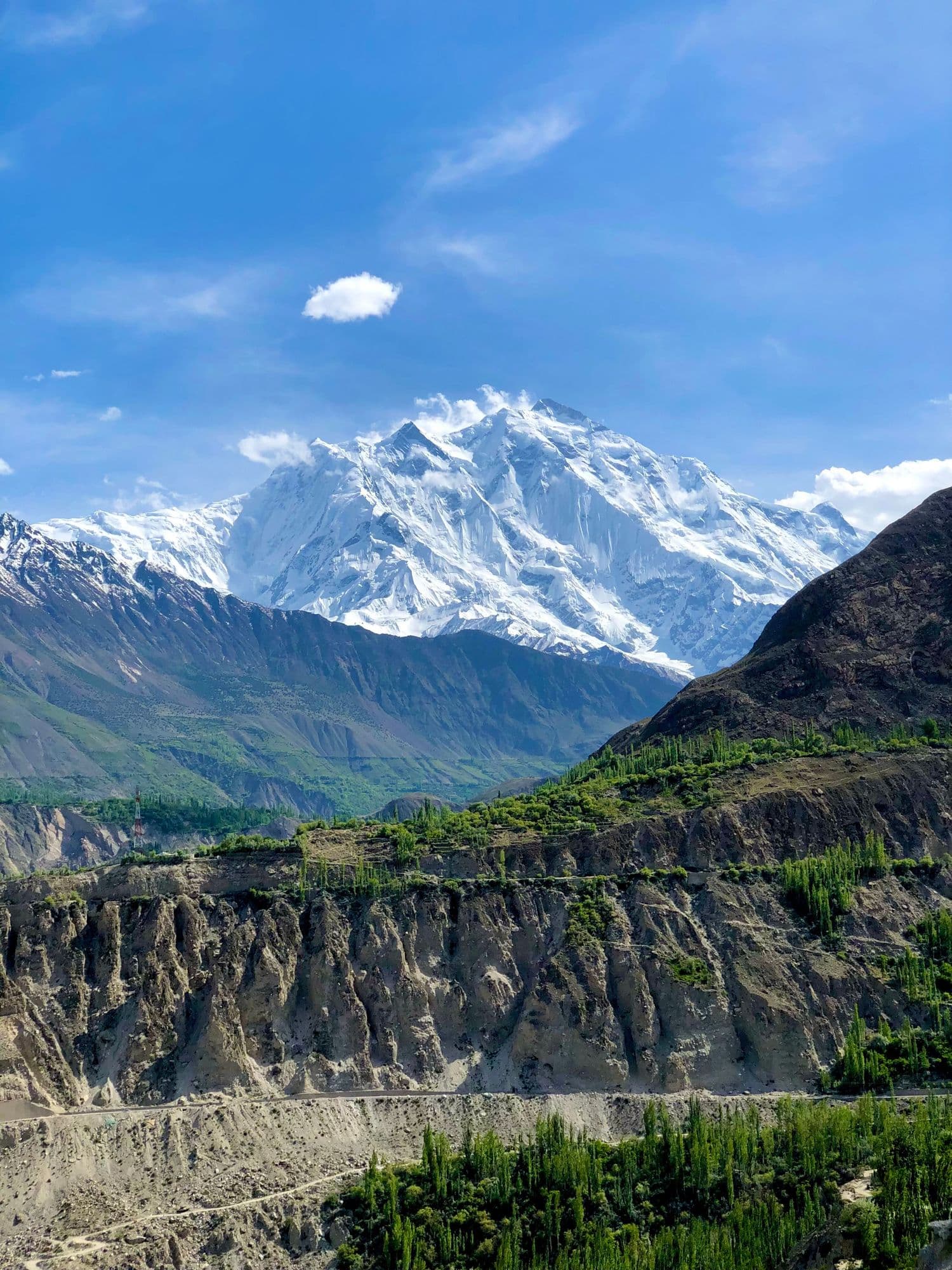
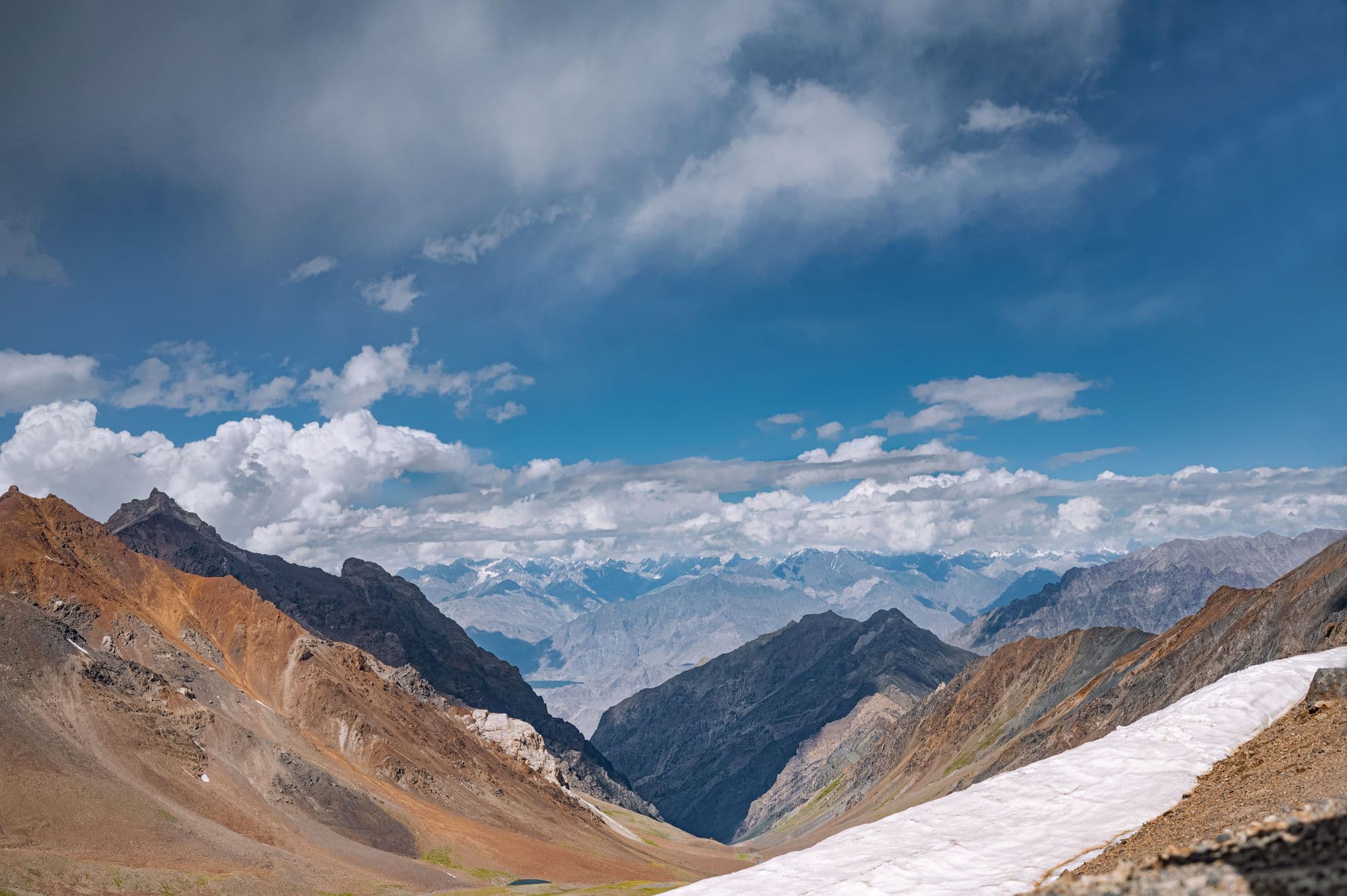
Hero: Shigar Lake, Photo: Osama Bin Younis / Pexels (photo page, Pexels licence). Nanga Parbat, Photo: maaz kalia / Pexels (photo page, Pexels licence). Rakaposhi, Photo: the_mountainb0y / Pexels (photo page, Pexels licence). Burzil Pass, Photo: Neha Siraj Khan / Pexels (photo page, Pexels licence).
Take the next step
Get the free Pakistan Trip Planner 2027, or tell us your dates and we will cost a private itinerary around them.
Comments (0)
No comments yet — be the first to share your thoughts.