
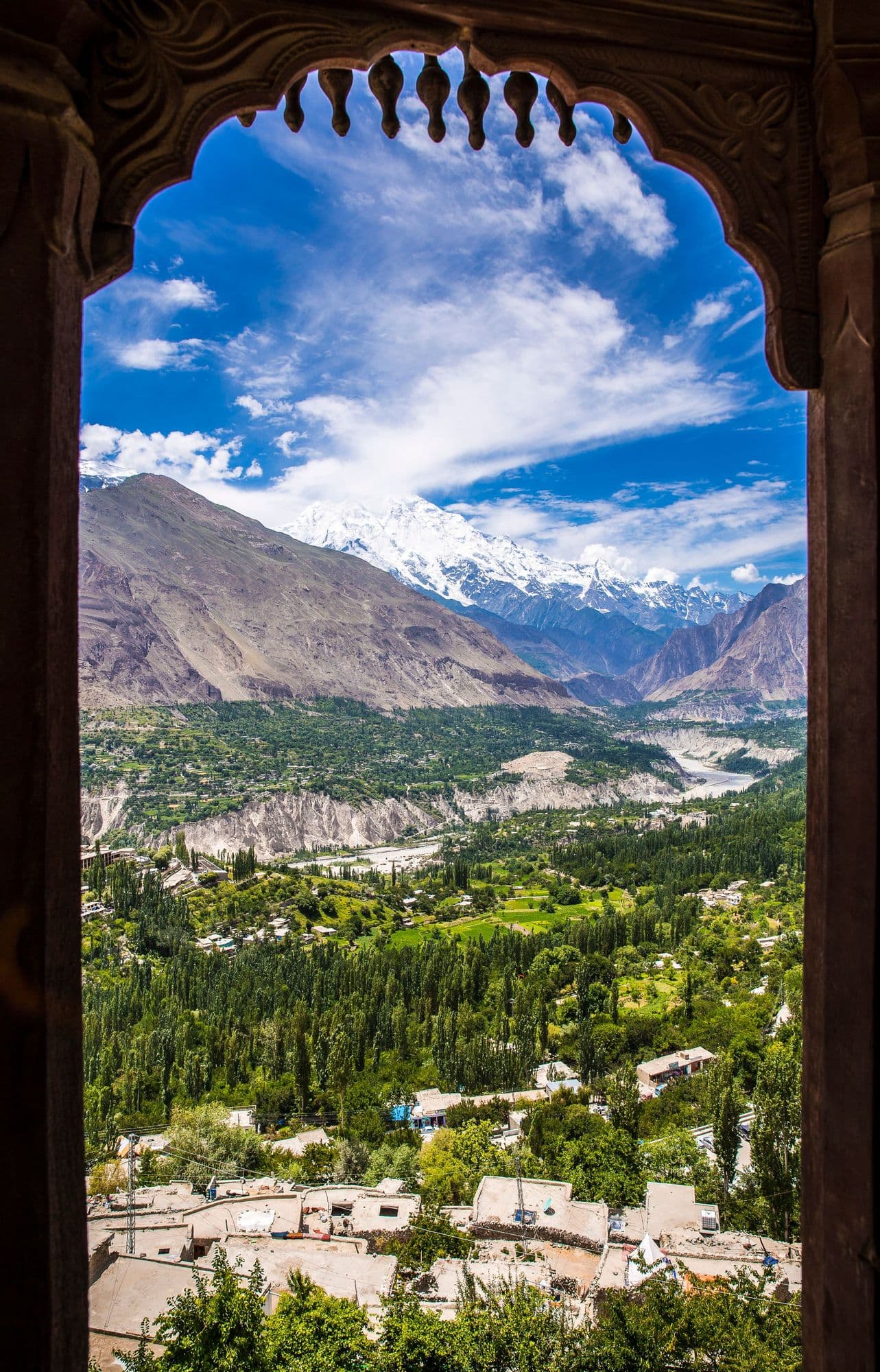
Yes, a woman can travel alone in Hunza and Skardu, and most who do describe Gilgit-Baltistan as the easiest and most welcoming part of Pakistan. What you should expect is not danger but attention: constant staring in the bazaars, endless questions, invitations to tea you will sometimes want to refuse, and a few logistics (dress, transport, SIM cards, registration) that are simply different from Europe or North America.
I grew up in Hunza and I work with the women and men who guide for Third Pole Adventures, so I spend a lot of my year answering emails from women in Manchester, Toronto and Melbourne who have already decided to come and want someone to tell them the truth rather than sell them a tour. This is that email, written long. I have leaned on the accounts of two foreign women who travelled Pakistan alone for months, because their experience of being a visible outsider is different from mine, and on the official advice, because your insurer will read that before anything I say.
The honest headline: curiosity, not aggression
Two long-term accounts set the tone. A traveller who spent five months alone in Pakistan wrote that she never experienced theft, physical harassment or assault, that staring was constant but "curiosity is the dominant mode, not aggression", and that Gilgit-Baltistan, meaning Hunza and Skardu, was "notably more relaxed" and the most welcoming region for solo women (Into the Wild Unknown). Another, who spent seven months in the country, counted being followed four times and harassed twice, judged Pakistan about as safe for women as most of Asia and safer than her experience of India, and named Hunza one of the safest and most stable places in Pakistan (Laure Wanders).
She also describes being robbed at gunpoint in daylight in Lahore. I include that because this post is called "what to actually expect", and what to expect is that the north and the big cities are different countries for a woman alone. Islamabad and Lahore need ordinary big-city care. Peshawar and rural Khyber Pakhtunkhwa are conservative places where few women are visible on the street and the attention is sustained. Hunza, Ghizer and the Skardu valleys are where you will exhale.
Why is Hunza different? Most of the valley is Ismaili Muslim, girls' education has been near-universal here for two generations, and women run shops, cafés, carpentry workshops and the ticket desk at Altit Fort. The women's social enterprise Ciqam, based in Altit, manages the fort, runs a café in the orchard below it and built a traditional-style guesthouse next door (Dialogue Earth). You will see women walking alone, driving, and sitting in restaurants without a man. That changes how you are seen.
Skardu is more conservative than Hunza. Baltistan is largely Shia and Nurbakhshi, women are less visible in the bazaar, and you will feel more eyes on you. It is still safe in the sense that matters, and the guesthouse owners in Skardu are some of the kindest people I know, but dress a notch more modestly than you did in Karimabad and expect the bazaar to be a male space in the evening.
Official advice, and what it means for your insurance
As of its update on 27 October 2026, the UK Foreign Office does not advise against travel to Gilgit-Baltistan as a whole. It does advise against all travel on the Karakoram Highway between Mansehra and Chilas (the section through Battagram, Besham and Dasu), warns against driving the highway at night, and says all foreign nationals must register with the local authorities when visiting Gilgit-Baltistan (FCDO regional risks). Flights to Gilgit and Skardu "may be unreliable" and the Babusar Pass closes with snow. Check your own government's page, because an "advise against" line voids most travel insurance for that area.
In practice: fly Islamabad to Gilgit (about 1 hour 15 minutes) or Skardu (about 1 hour), keep one or two buffer days for weather, and if you must go by road, use the daytime and the Naran–Babusar route in summer rather than the lower KKH (Northern Discover; see also our flight versus road guide). Registration at checkposts is routine: a police officer writes your passport and visa numbers into a ledger, sometimes photographs your passport, and waves you on. Keep ten photocopies in your bag.
What to wear
Loose trousers, tops that cover your arms and backside, and a scarf (a dupatta) you can pull over your hair in a mosque, a shrine or a conservative bazaar. Nowhere in Pakistan should you show legs, shoulders, back, belly or cleavage (Laure Wanders). You do not need to cover your face anywhere, and in Hunza you do not need to cover your hair.
Buy a shalwar kameez in Islamabad or Gilgit for around PKR 2,000 to 5,000 [confirm locally: current ready-made prices in Gilgit bazaar]. Both long-term travellers found it changed how they were treated, especially outside Hunza, and it is the most comfortable thing you will own in 35 °C in Skardu. Hiking clothes are fine on the trails; local women in Hunza hike in them too. Add a swimsuit only if your guesthouse has a private pool; there is no public swimming for women.
Getting around alone
Flights. Book the morning Islamabad flights to Gilgit or Skardu directly with PIA and keep your onward plans loose by a day.
Buses. NATCO, the Gilgit-Baltistan government bus company, runs daily services from Rawalpindi and Islamabad to Gilgit and Skardu, mostly overnight, and the journey is fourteen to twenty hours depending on the road [confirm locally: current NATCO departure times and fares]. Women are seated with other women or families as a matter of course; when you book, say you are travelling alone and the clerk will arrange it. Keep valuables on your body on night buses.
Shared jeeps and vans. Between towns in Gilgit-Baltistan, shared Hiace vans and jeeps leave when full. As a solo woman you will usually be given the front seat beside the driver, which costs a little more and keeps you out of the crush (Into the Wild Unknown). Agree the fare before you sit down.
Taxis and apps. In Islamabad and Lahore, ride-hailing apps such as InDrive work like Uber and let you share your trip with someone (Laure Wanders). In Hunza and Skardu there are no apps; your guesthouse will call a driver they know. Photograph the number plate and send it to a friend, and prefer daytime travel between towns (Northern Discover).
Hitchhiking. Foreign women do it in upper Hunza, where buses are rare, and the long-term travellers report it going well. I would not do it after dark anywhere, and I would not do it at all around Chilas.
Where to sleep
Family-run guesthouses and homestays, every time. The owner's wife or daughters will take you into the kitchen, you will be fed until you cannot move, and someone will notice if you are not back by dark. Book at least your first two nights in Karimabad, Gilgit or Skardu with a well-reviewed place before you fly, and ask whether there are women on the staff if that matters to you (Northern Discover). A clean budget room in Karimabad runs roughly USD 15 to 40 a night [confirm locally: 2027 guesthouse rates]. In Altit, the Ciqam women's guesthouse below the fort is the obvious place to spend a night.
Hunza has a growing number of women-run cafés in Karimabad and Altit, which are the best places to meet local women rather than only men. Ask your host which ones are open this season.
Phones, money and the small practicalities
A Jazz or Zong SIM bought in Islamabad with your passport works in the cities and in Gilgit, Skardu and Karimabad, but much of Gilgit-Baltistan runs on the local SCOM network, which Jazz does not roam onto (Laure Wanders). Buy a SCOM SIM in Gilgit or Skardu with your passport if you are heading up any side valley [confirm locally: current rules for foreigners buying SCOM SIMs]. Expect dead zones on every long drive and nothing on the treks.
Cash: ATMs in Gilgit and Skardu often reject foreign cards; carry enough rupees for a week and some US dollars as a reserve. Pay guesthouses in cash.
Toilets on the road are basic and rarely have paper; carry your own, plus hand gel. Sanitary products are sold in Gilgit and Skardu pharmacies but not in villages. Bring what you need for the whole trip.
The conversations you will have
You will be asked, dozens of times a day, where you are from, whether you are married, and where your husband is. Both long-term travellers chose to say they were married, and one keeps a photo of a "husband" on her phone. Smiling and chatting warmly with men can be misread as interest, so be friendly but a little formal, and know that a man who avoids your eyes while talking to you is being respectful, not rude (Laure Wanders). Invitations to tea are usually exactly what they seem; you may also refuse any of them, politely and without explanation, and you owe no one your time (Into the Wild Unknown).
Photo requests happen, especially from families on holiday from the cities. Say yes when you want to, no when you do not. In Hunza, ask before photographing women; in Skardu, do not photograph women at all without a clear yes.
[owner: add a local detail here — e.g. a Hunza woman guide's name, or the café in Karimabad where our women guides meet solo guests on their first evening]
If you would rather not do it all alone
Plenty of women who could travel solo choose a local guide for the first few days, not out of fear but because a Hunza woman walking you through Ganish and Altit is a different trip from a guidebook. We run private itineraries with female guides on request; the Gilgit-Baltistan Autumn Tour and the 13-day Ultimate Pakistan Tour both work as a frame you can leave and rejoin, and the Snow Lake / Biafo-Hispar La trek is one where you will want a team anyway.
Frequently asked questions
Gilgit-Baltistan, especially Hunza, is consistently described by solo women as the safest and most relaxed part of Pakistan. Expect staring and questions, not violence. Take normal city precautions in Lahore and Islamabad.
No. Carry a scarf for mosques, shrines and conservative bazaars, and cover your hair in Skardu's old town if you want less attention. Everywhere, cover legs, shoulders and chest.
Yes. NATCO and private companies seat women with other women or families. The overnight journey is long, so many women fly instead and keep a buffer day.
It is safe but more conservative: fewer women in public, more staring, and the bazaar is a male space at night. Dress a little more modestly and take a taxi after dark.
No, as of October 2026. It advises against the Karakoram Highway between Mansehra and Chilas and against night driving, and requires foreigners to register in Gilgit-Baltistan. Check your own government's page before booking.
Plan it with women who live here
Download our free Pakistan Trip Planner 2027 for a packing list, a season calendar and a one-page "what to tell your family" sheet. Or request a custom itinerary and say you want a woman to answer; one of us in Hunza will write back.
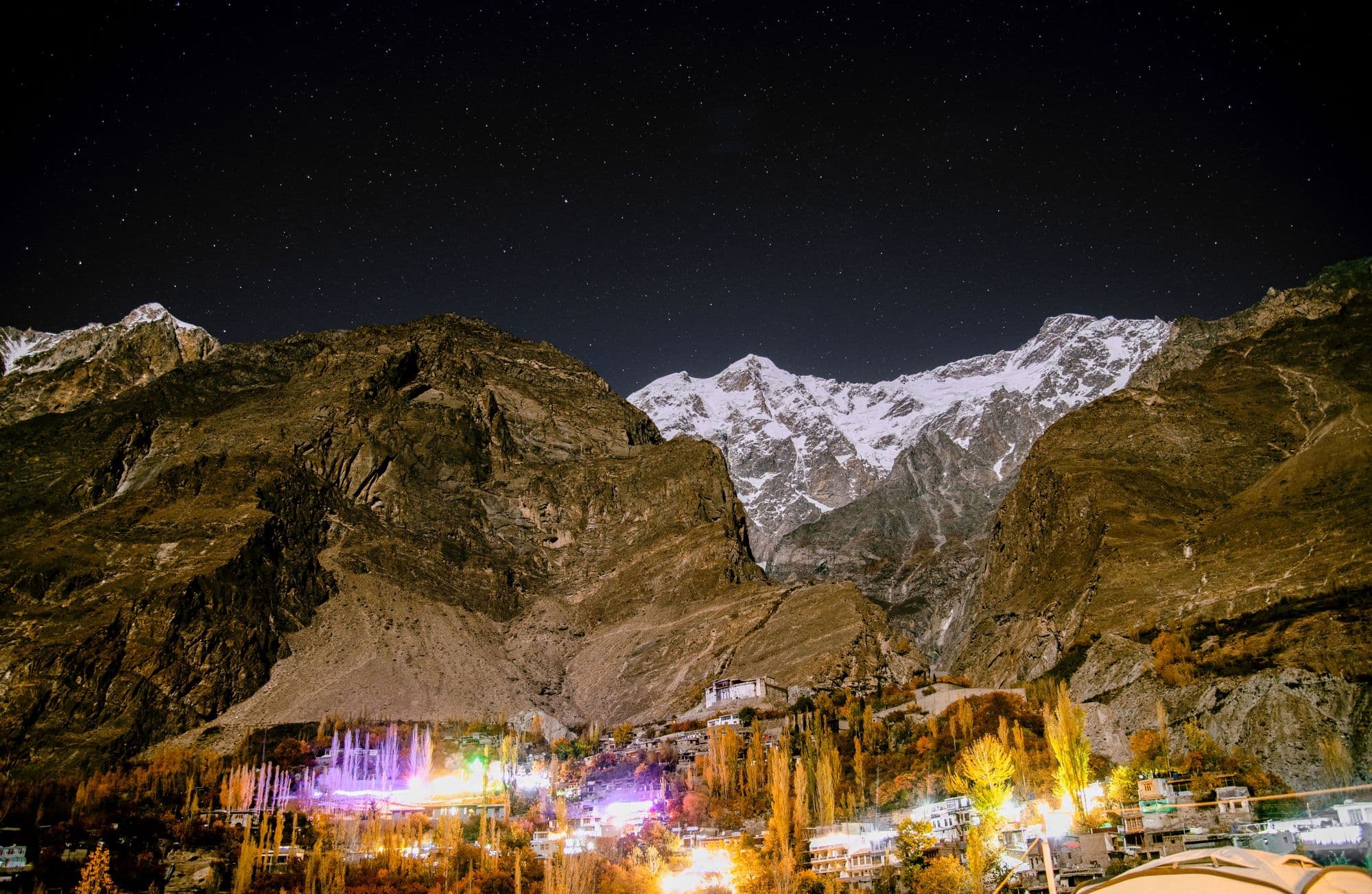
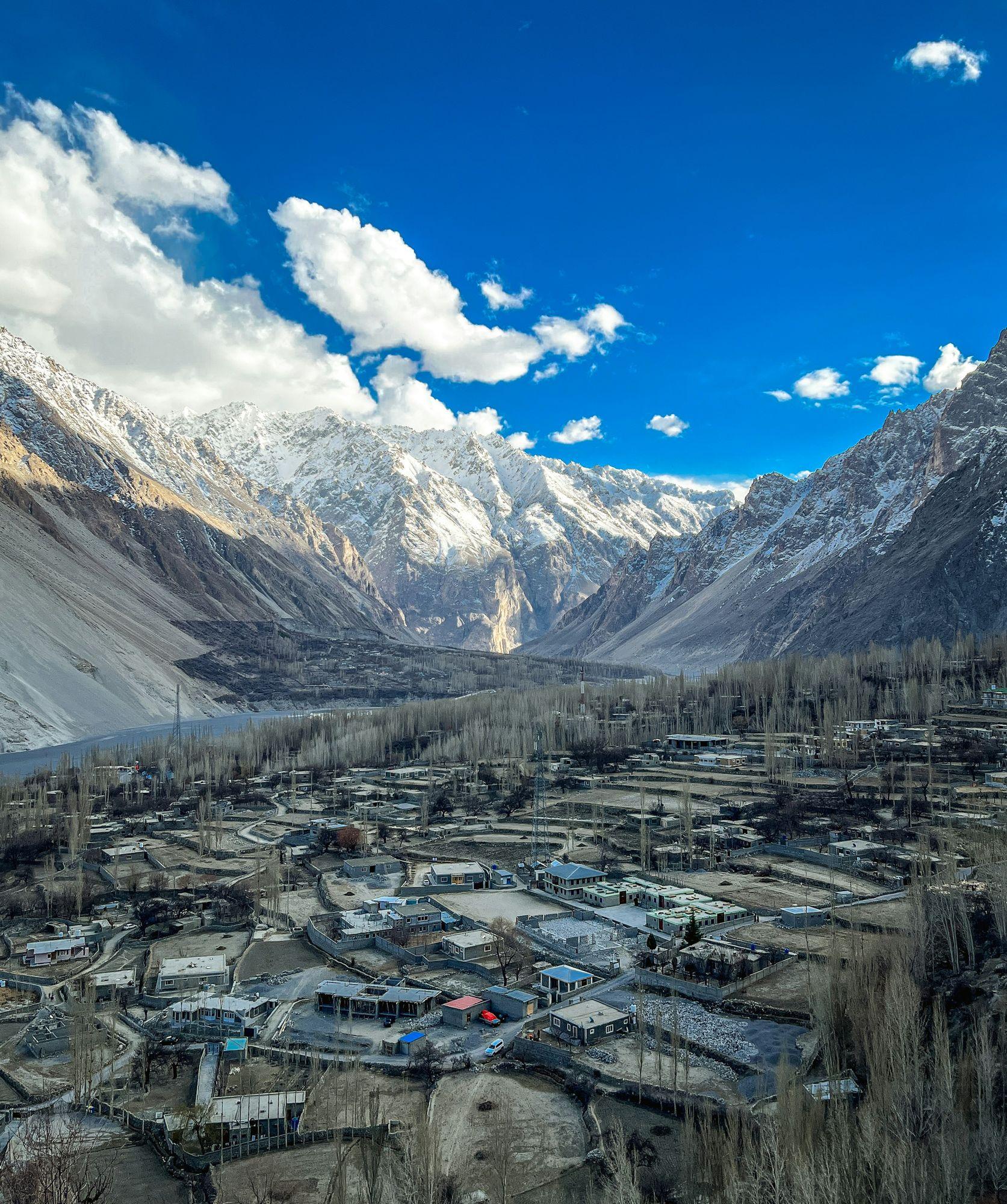
Photo credits: Altit Fort window: Aakash Ashraf / Pexels (Pexels Licence). Karimabad at night: Wasif Mehmood / Pexels (Pexels Licence). Gulmit from the air: Hasan Shaukat / Unsplash (Unsplash Licence).
Take the next step
Get the free Pakistan Trip Planner 2027, or tell us your dates and we will cost a private itinerary around them.
Comments (0)
No comments yet — be the first to share your thoughts.