
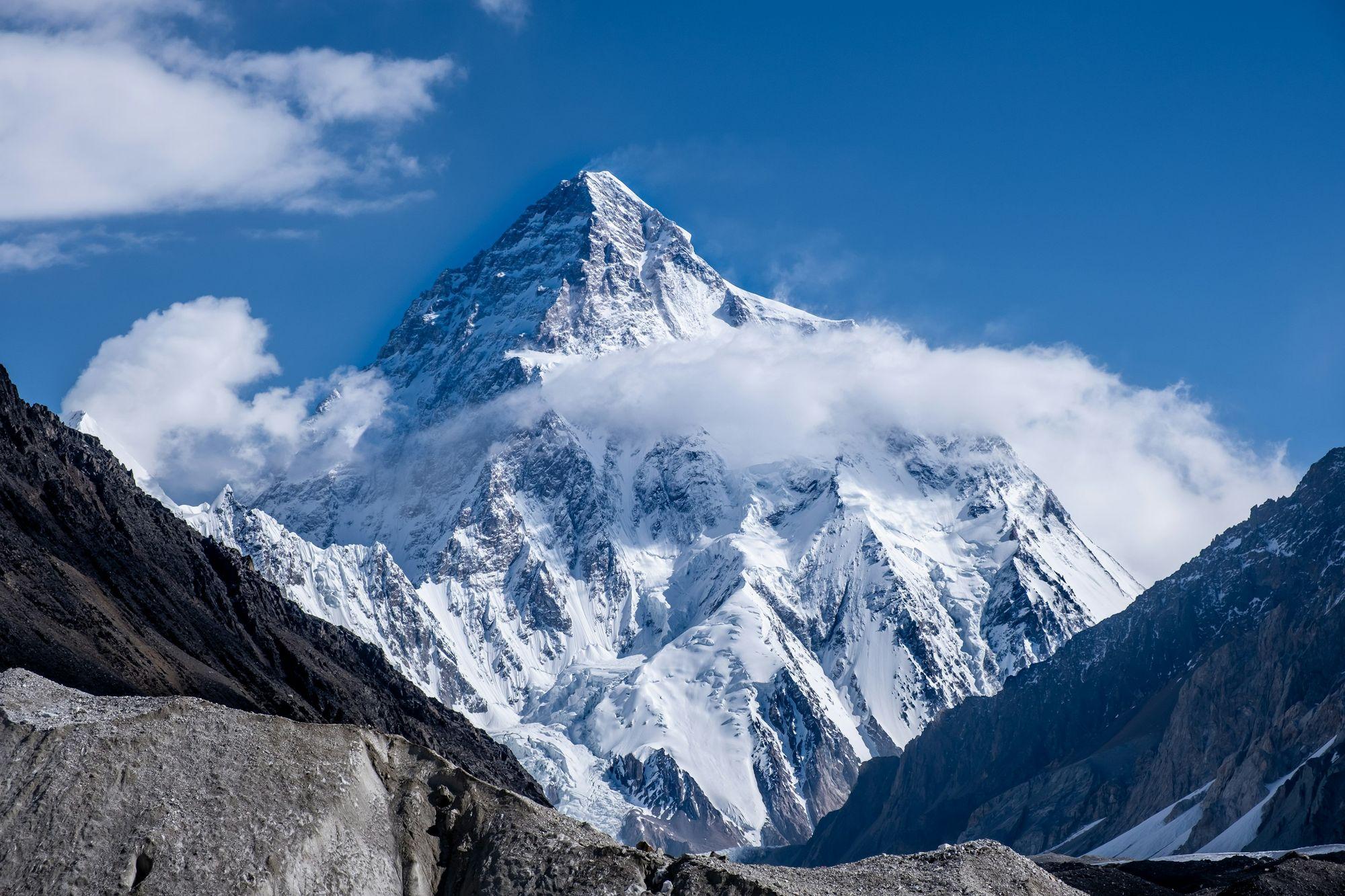
Pack for a Karakoram trek the way you would for a cold, dry, sunny mountain range with no electricity, no shops and no quick way out: a sleeping bag rated to at least −10 °C comfort, a proper layering system, serious sun protection, your own water treatment and enough battery and cash to last two weeks. Everything else on this list is detail, and the detail is where people go wrong.
I am a guide from Hunza, and every July I stand at the roadhead in Askole or Hushe watching duffel bags being weighed. I have seen a Londoner arrive with two cotton hoodies and a Dutch couple with a hairdryer. I have also seen people who packed perfectly and had a far better trek because of it. This is the list I send my own guests, written for the K2 base camp and Snow Lake / Biafo-Hispar La routes, with notes on what changes for shorter walks like Rakaposhi base camp or the Passu glaciers.
First, understand the conditions you are packing for
The Karakoram is not the Alps and it is not Nepal. The valleys are high desert: Askole sits at about 3,000 metres and Concordia at about 4,600, and in between there is almost no tree cover. In July and August the daytime at Concordia is roughly 5 to 15 °C and the nights drop below freezing, according to the Central Karakoram National Park's own trek packing guidance. On the glacier the sun reflects off ice from every direction, so you will be too hot at noon and shivering by 7 pm on the same day.
There is no mains electricity past Skardu, no mobile signal past the first day's walk, and the only shop is the one you carried in. Rescue, when it happens, is by helicopter, which is why insurance is on a packing list at all. Hold those four facts in your head (cold nights, savage sun, no power, no escape) and the list below will make sense.
Sleeping: the one item not to compromise on
Bring a sleeping bag rated to −10 °C comfort as a minimum, down rather than synthetic for the weight. The CKNP guidance gives the same figure. The travel writers at Atlas & Boots used a 650-fill down bag rated to −18 °C on the Baltoro and called it "ideal for sleeping on a glacier", and for Snow Lake, where you camp at about 4,800 metres, I ask for −15 °C comfort. Check the comfort rating, not the "extreme" one printed in big letters.
Add an insulated sleeping mat with an R-value of 4 or more. Operators, including us, supply a foam mattress, but ice pulls heat out of you from below faster than the air does from above. A silk or fleece liner adds a few degrees and keeps the bag clean for two weeks.
Clothing: layers, not bulk
Think in four layers and pack them in these quantities. Two or three merino or synthetic base-layer tops and one pair of long bottoms. One fleece or light insulated mid-layer. One hooded down jacket of 700 fill or more for camp and the pre-dawn starts. One waterproof shell jacket and a pair of waterproof overtrousers, because storms arrive fast off the Baltoro even in a good July.
For your legs: two pairs of hiking trousers (zip-offs are useful on hot afternoons) and one pair of softshells for the cold mornings. Four or five pairs of thick trekking socks plus liners, and four sets of synthetic underwear. Then the small things that matter more than people think: a sun hat with a neck flap, a buff, a warm beanie, liner gloves and a pair of warm waterproof gloves. The Atlas & Boots list matches this almost item for item, and so does ours.
Leave cotton at home. It holds sweat, it never dries on a glacier, and it is the single most common reason I see guests cold at dinner.
Footwear
One pair of mid-weight, waterproof hiking boots with ankle support, worn in for at least fifty kilometres before you fly. Blisters on day two of a fourteen-day trek are not a nuisance, they are the end of the trek. Add gaiters for the moraine and the snow on the upper glaciers, and a pair of light camp shoes or sandals with a closed toe for river crossings and for evenings.
Crampons are needed only if your route crosses the Gondogoro La or a snow-covered pass like Hispar La. For Gondogoro La, strap-on C2 crampons work on a stiff hiking boot. If you do not own them, crampons, ice axes and harnesses can be rented in Skardu for roughly PKR 800 to 1,500 per day according to the CKNP [confirm locally: 2027 rental rates and availability in Skardu bazaar]. For Snow Lake we supply the ropes but ask you to bring your own harness, two locking karabiners and a prusik loop, because a harness has to fit.
Bags and the 25 kg rule
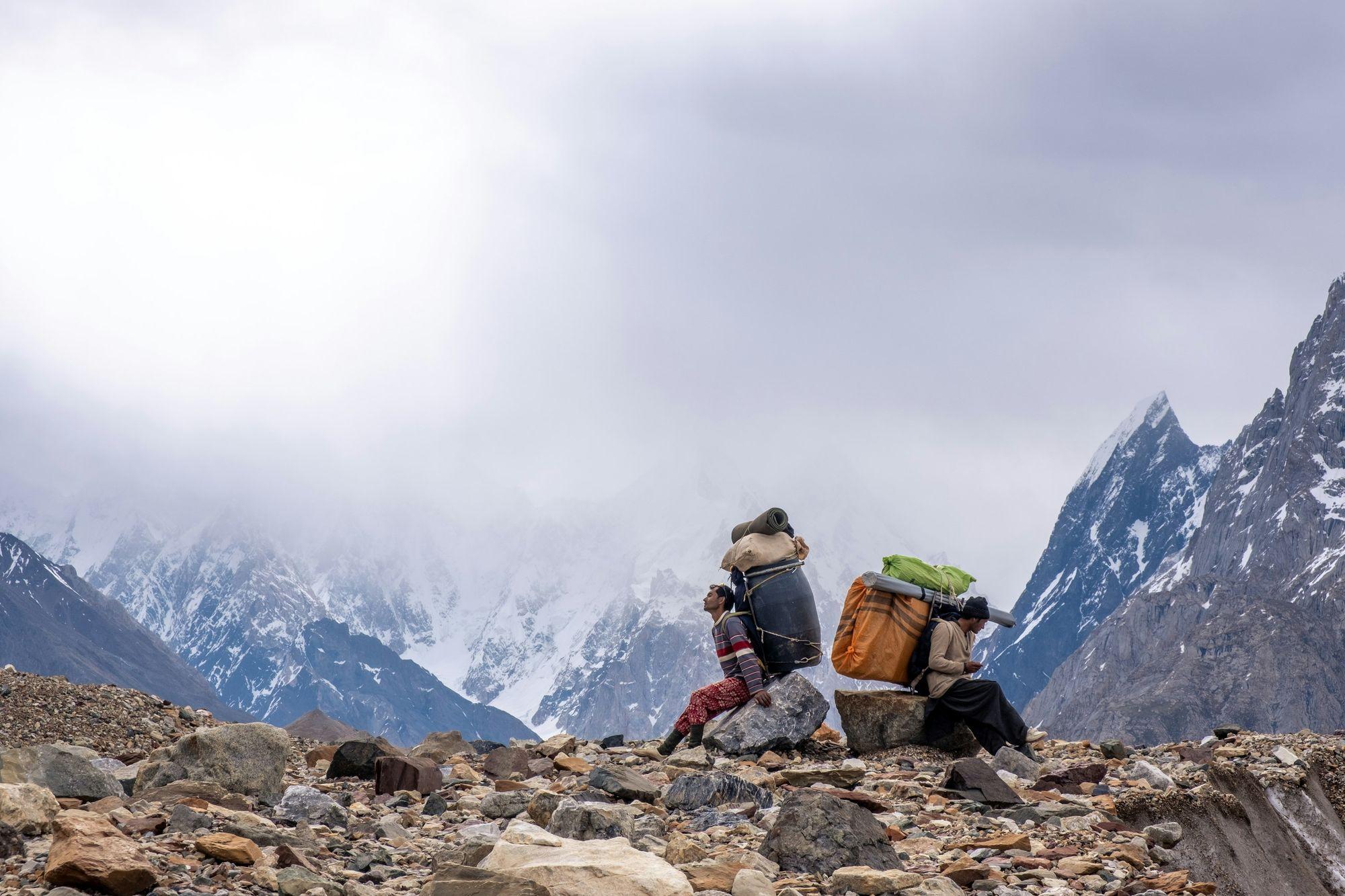
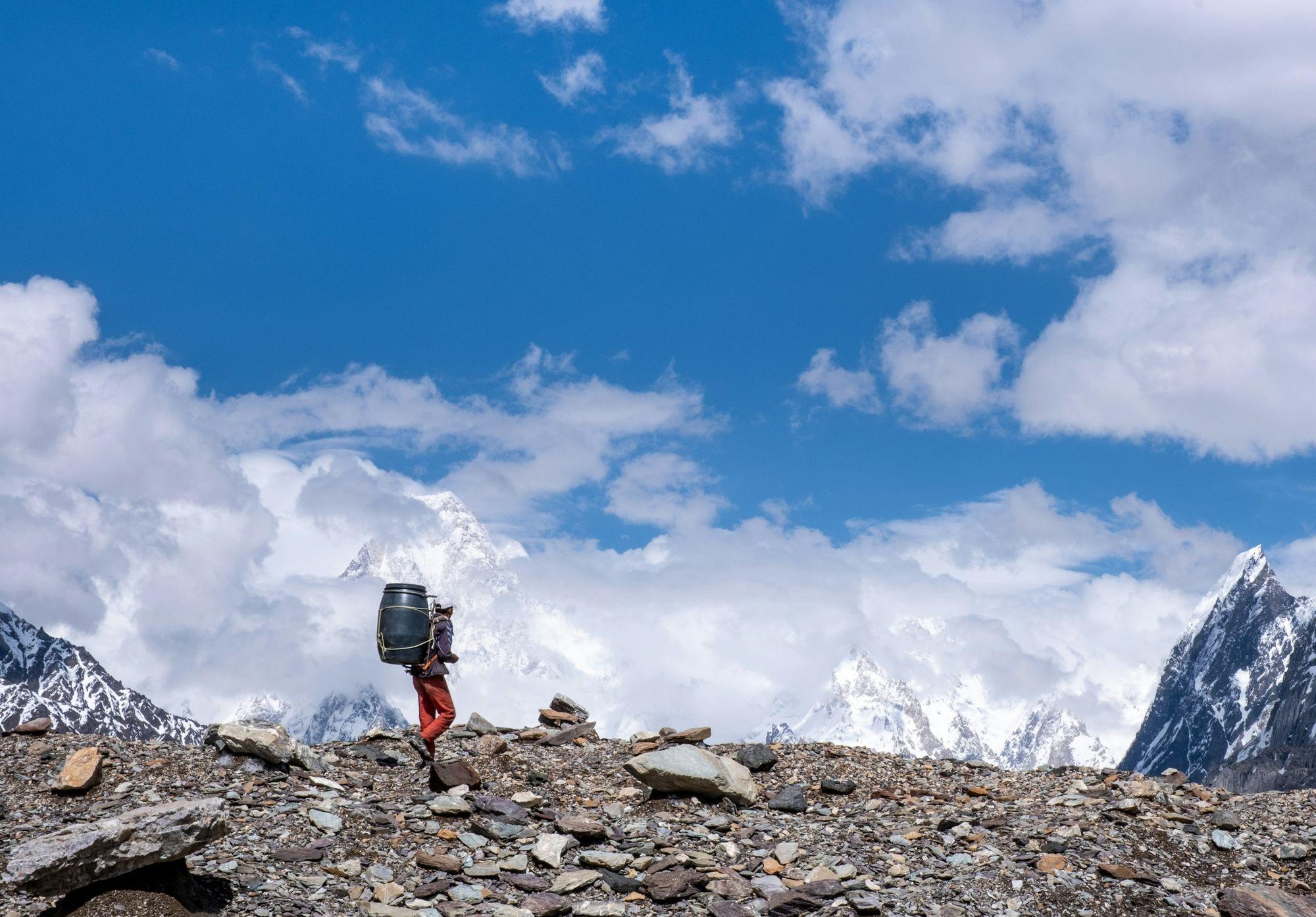
You will carry a day pack of 30 to 35 litres with water, layers, sun cream, camera and snacks. Everything else goes into an 80 to 100 litre soft duffel that a porter carries. The porter associations in Askole and Hushe set the load limit at 25 kg per porter, and that figure includes a share of group kit such as tents and kitchen gear. The CKNP uses a simple check: if your personal duffel weighs more than about 18 kg, you have overpacked. Our own allowance is 12 to 15 kg per trekker, and I would rather you arrive under it than hire an extra porter at the roadhead.
Line the duffel with a large dry bag and use two or three smaller ones inside for the sleeping bag, electronics and clothes. The Braldu river crossings and the afternoon squalls will test them. A rain cover for the day pack completes the set.
Water, sun and health
Plan to drink four to five litres a day. Glacier water is full of fine silt that clogs pump filters within days, so the CKNP recommends a UV purifier such as a SteriPEN with iodine or chlorine tablets as back-up, or boiled water from the kitchen, which we provide every morning and evening. Carry two one-litre bottles rather than a bladder, because bladders freeze and are hard to refill from a kettle.
Sun protection is not optional at 4,500 metres on ice. Category-4 glacier sunglasses (not fashion shades), SPF 50 cream, SPF lip balm and that neck-flap hat. I have treated more sunburnt lips and snow-blind eyes than frostbite in twenty years.
Your medical kit should include blister plasters, painkillers, anti-diarrhoea tablets, rehydration salts, antiseptic, any personal prescriptions and, after a chat with your doctor, acetazolamide (Diamox) for altitude. Bring two paper photocopies of your passport and visa for the permit and the checkposts, and a travel insurance certificate that explicitly covers helicopter evacuation from above 5,000 metres. A helicopter from Concordia is a five-figure bill without it.
Power, cash and paperwork
No power past Skardu means a 20,000 mAh power bank as a minimum for a two-week trek, more if you shoot video. A small solar panel helps on the glacier, where the sun is relentless, but it charges slowly and is not a substitute. Download offline maps before you leave Islamabad.
Cash: ATMs exist in Skardu and Gilgit and nowhere beyond them, and many Pakistani ATMs refuse foreign cards on the first try. The CKNP suggests USD 600 to 800 in rupees or dollars beyond what your operator covers for a 16-day trek, for tips, drinks, a hotel night if the flight is cancelled and souvenirs. Carry it in two places.
Phones: Jazz, Zong and Telenor work in Gilgit, Skardu and Hunza, but for the side valleys the local SCOM network is the only one with coverage, and a SCOM SIM is sold only in Gilgit-Baltistan with your passport [confirm locally: current SCOM SIM rules for foreigners]. None of them work on the glacier, so tell your family the dates you will be silent.
Finally, foreign nationals must register with the local authorities in Gilgit-Baltistan, and trekking in restricted zones needs a permit that can take weeks, as the UK FCDO notes. We handle both, but keep the paperwork with you, not in the duffel; see our full guide to permits and NOCs.
What to leave at home
Drones, which need a separate permit in Pakistan and are confiscated at checkposts without one. Alcohol. A heavy tripod. Cotton anything. Hardback books. Jeans. A hairdryer (yes, really). Anything you cannot bear to lose, because duffels fall off jeeps and into rivers more often than anyone admits.
What changes for shorter treks
For Rakaposhi base camp (three to four days from Minapin, camping at about 3,500 metres), the Patundas meadow above Passu or the Hoper glacier day walks, the list shrinks rather than changes. You can drop the −10 °C bag to a −5 °C comfort rating, skip crampons and gaiters, and carry a 15,000 mAh power bank. Keep the sun kit, the boots and the layers exactly as above; the sun at Rakaposhi base camp is the same sun. These are the walks we build into the Gilgit-Baltistan Autumn Tour and the 13-day Ultimate Pakistan Tour for guests who want a taste of the Karakoram without two weeks on ice.
[owner: add a local detail here — e.g. the item guests most often forget at Askole, or what the Hushe porters wear on their feet]
Frequently asked questions
A bag rated to at least −10 °C comfort, down preferred. For Snow Lake and other camps near 4,800 metres, take −15 °C comfort. Add an R-4 or warmer mat.
25 kg, set by the porter associations in Askole and Hushe, and that includes a share of group gear. Keep your personal duffel to 12 to 15 kg; over 18 kg means you have overpacked.
Only if you return over the Gondogoro La. The Baltoro to Concordia and K2 base camp is walked in boots. Crampons, axes and harnesses can be rented in Skardu.
No. Nothing past Skardu or the first day from Askole. Bring a 20,000 mAh power bank and, if you want a signal in the valleys, a SCOM SIM bought in Gilgit-Baltistan.
Roughly USD 600 to 800 for a two-week trek beyond what your operator covers, in rupees or dollars. ATMs exist only in Skardu and Gilgit.
Pack with people who have done it a hundred times
Our free Pakistan Trip Planner 2027 includes this list as a printable tick-sheet, with a column for each route. Or tell us which trek you are considering and request a custom itinerary; we will tell you honestly what to buy, what to rent in Skardu and what you already own that will do.
Photo credits: K2 from the Baltoro: Daniel Born / Unsplash (Unsplash Licence). Trekker on the Baltoro moraine: Daniel Born / Unsplash (Unsplash Licence). Porter below Gasherbrum IV: Daniel Born / Unsplash (Unsplash Licence).
Take the next step
Get the free Pakistan Trip Planner 2027, or tell us your dates and we will cost a private itinerary around them.
Comments (0)
No comments yet — be the first to share your thoughts.