

Why Take the Gilgit-Baltistan Autumn Tour?
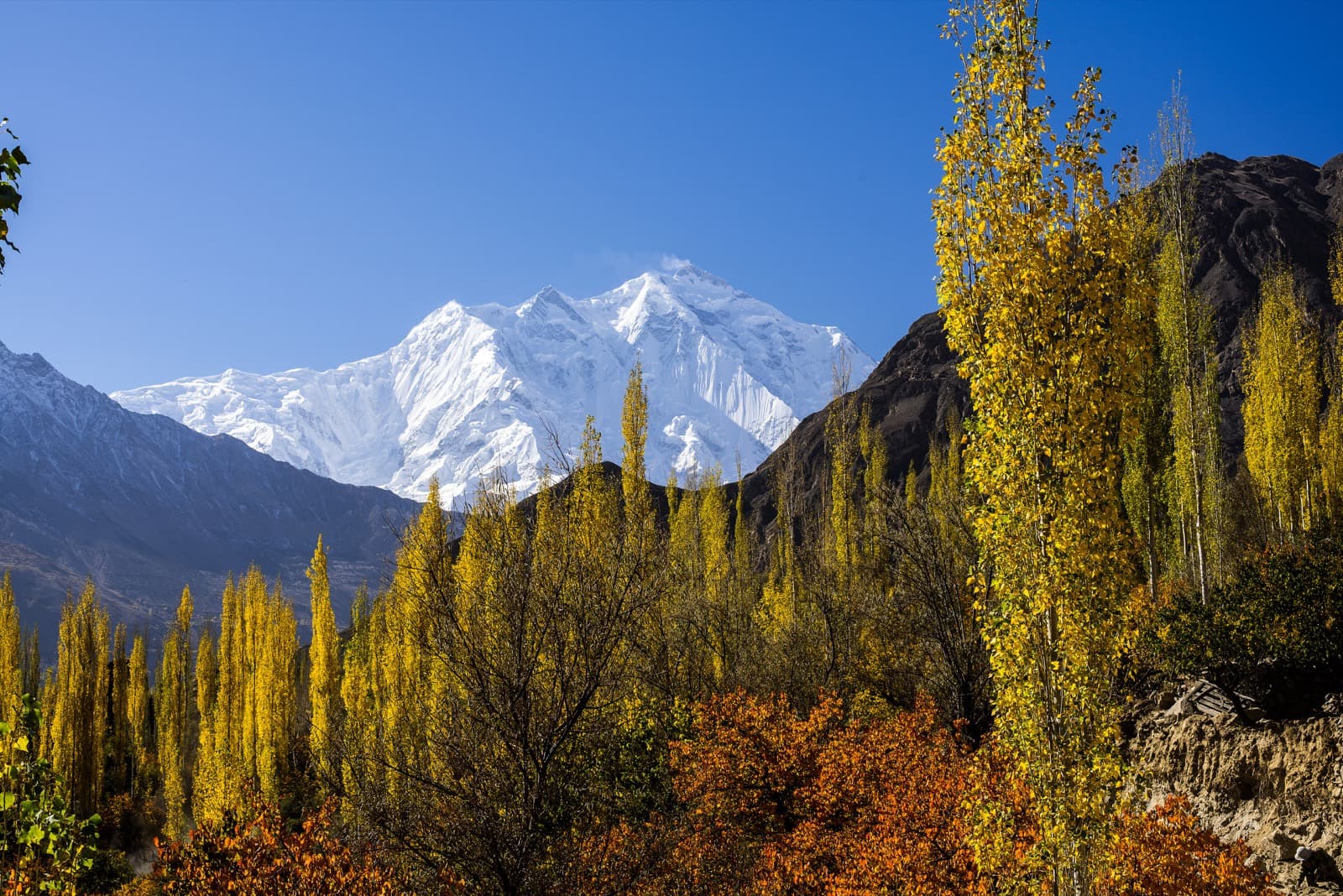
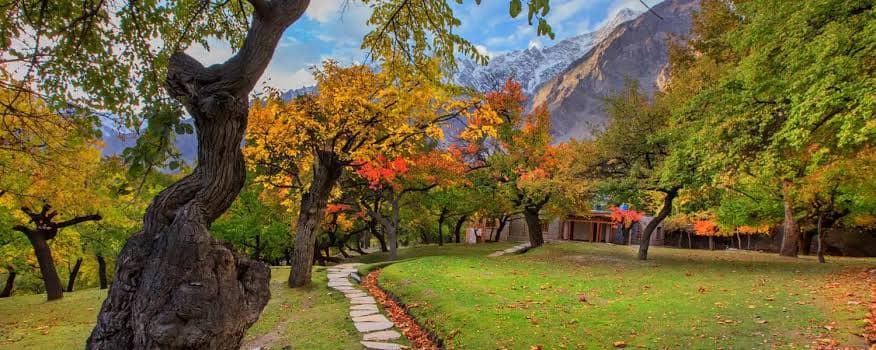
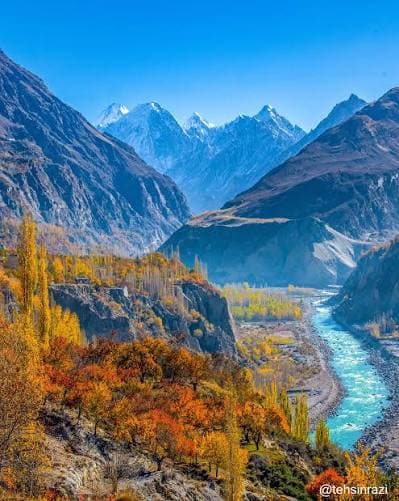
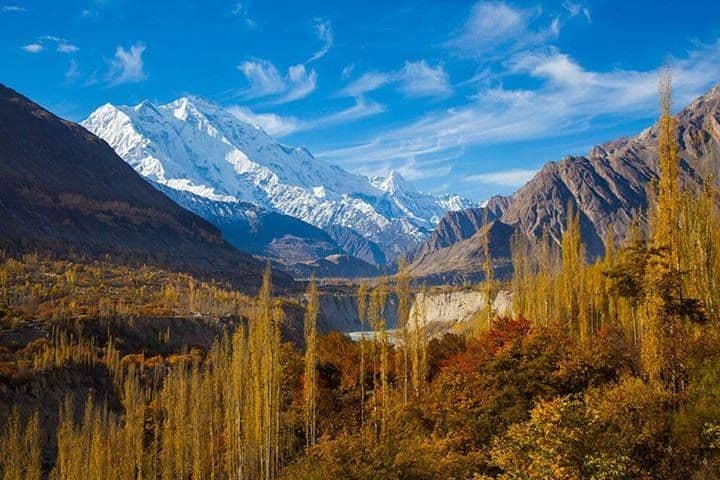
Autumn is when Gilgit-Baltistan looks its best. For a few weeks each year the apricot, cherry, walnut and mulberry orchards that feed these villages through winter turn gold and rust, set under snow peaks over 7,000 metres and clear skies. Over 13 easy days you travel the Karakoram Highway from Islamabad through Balti Skardu, Shigar and Khaplu, into the orchards and old forts of Hunza, and up to the Khunjerab Pass on the China border. It isn't a trek, just a scenic cultural road trip with a good hotel every night. The summer crowds have gone, the air is crisp, and warm foliage below fresh snow makes this the finest time to see the north.
Tour Highlights
- Whole valleys of apricot, cherry, walnut and mulberry orchards turning gold, amber and crimson across Hunza, Skardu, Shigar and Khaplu.
- The Karakoram Highway, the old Silk Route reborn as one of the world's great mountain roads, climbing to the 4,693 m Khunjerab Pass.
- Hunza's living heritage: the 700-year-old Baltit and Altit forts above Karimabad, ancient Ganish, and the Duikar (Eagle's Nest) sunset.
- Baltistan's forts and deserts: Shigar Fort, Khaplu Palace, the 700-year-old Chaqchan Mosque, and the Katpana and Sarfaranga cold deserts.
- Lakes and glaciers: turquoise Attabad Lake, the Kachura (Shangrila) lakes, Borith Lake, and the Passu Cathedral cones and glacier.
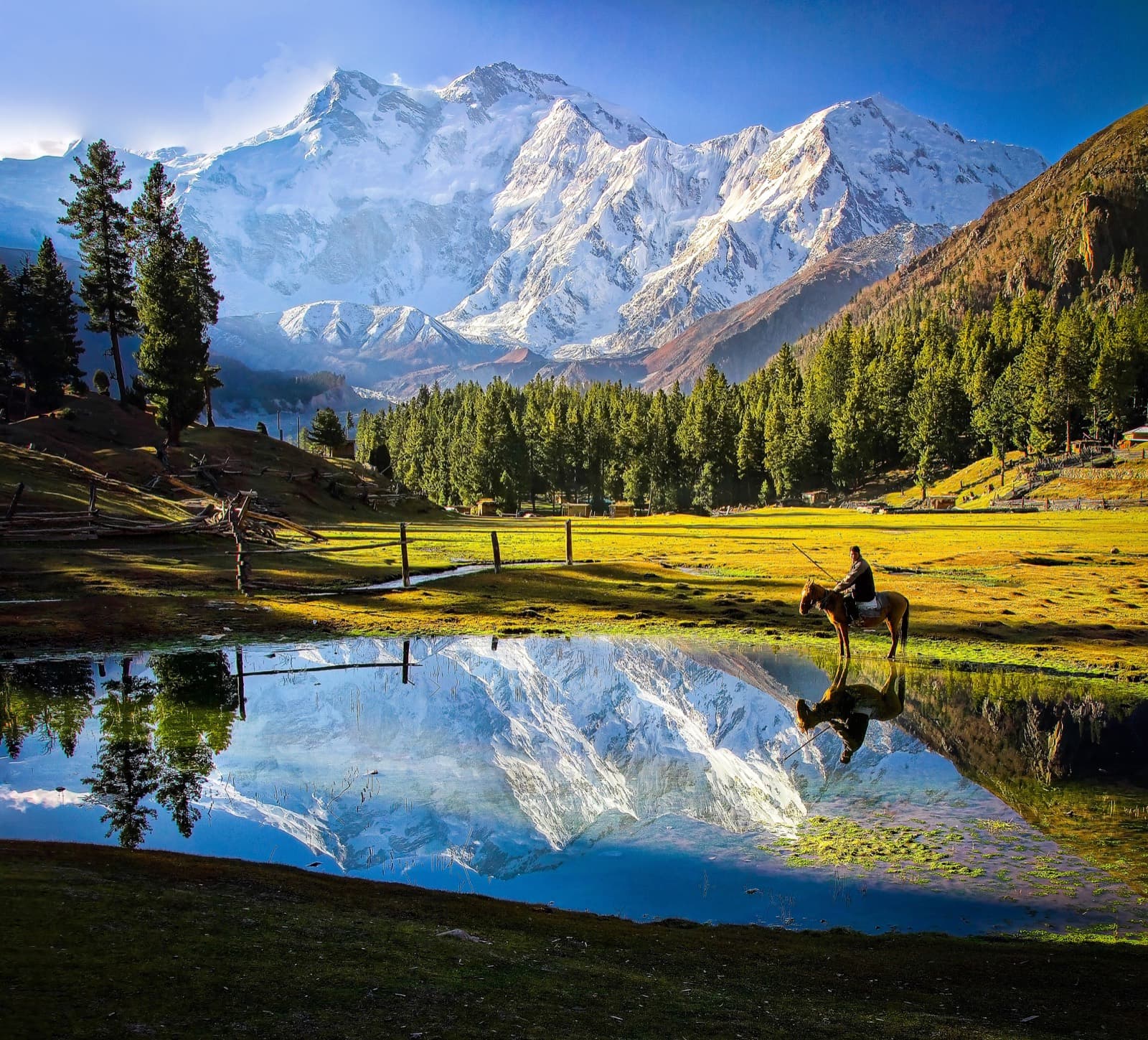
- Nanga Parbat (8,126 m), Rakaposhi (7,788 m), Diran, Ultar and the Passu peaks, all seen from the road on a clear day.
- Balti, Burusho and Wakhi hospitality, famous for its warmth, its food and its apricot-scented valleys.
Autumn Tour Itinerary — Day by Day (13 Days)
Drive times, altitudes and stops are indicative. Karakoram weather and roads change quickly, so your guide may adjust the schedule for safety and comfort. The Gilgit–Islamabad flight depends on clear weather, and a buffer day is built in to protect your international flight home.
- DAY01
Arrival in Islamabad
~540 mYou're met at Islamabad airport and taken to your hotel, with the day free to rest before a welcome dinner and trip briefing. If time allows, we can fit in Faisal Mosque, the Pakistan Monument or a Margalla Hills viewpoint. Overnight: hotel, Islamabad.
- DAY02
Drive Islamabad to Chilas along the Karakoram Highway
~1,265 mAn early start onto one of the world's great mountain roads: over the Babusar Pass (4,173 m), down to the Karakoram Highway and along the Indus to Chilas, with the valleys already turning gold. If snow closes Babusar we take the KKH via Besham. Drive: 10–12 hrs. Overnight: hotel, Chilas.
- DAY03
Drive Chilas to Skardu via the Indus gorge
~2,230 mWe follow the Indus, stopping at the junction where the Karakoram, Himalaya and Hindu Kush meet and, on a clear day, the Nanga Parbat viewpoint near Thalichi. The road then turns east into the wide Skardu valley. Drive: 7–8 hrs. Overnight: hotel, Skardu.
- DAY04
Skardu sightseeing — Kharpocho Fort, Kachura Lakes and Katpana desert
~2,230 mAn easy day around Skardu: hilltop Kharpocho Fort over the Indus, the mirror-still Upper and Lower Kachura (Shangrila) lakes, and the Katpana cold desert with its dunes under snow peaks. The low autumn sun makes this one of the best days for photos. Overnight: hotel, Skardu.
- DAY05
Excursion to Shigar Valley and Shigar Fort
~2,300 mA short, scenic drive to the Shigar valley, gateway to the Baltoro glaciers and K2. We tour the restored 17th-century Shigar Fort, wander the old Balti village and take in the Sarfaranga desert, autumn colour everywhere. Overnight: hotel, Skardu or Shigar.
- DAY06
Excursion to Khaplu Valley — fort and Chaqchan Mosque
~2,600 mWe follow the Shyok east to Khaplu, once a Balti kingdom and one of the prettiest valleys here. The highlights are Khaplu Palace and the 700-year-old Chaqchan Mosque, below golden terraces and the Masherbrum peaks. Overnight: hotel, Khaplu.
- DAY07
Drive Khaplu to Hunza via Gilgit
~2,500 mA long but spectacular day back down the Indus and up the KKH into Hunza, with a stop at the Rakaposhi viewpoint where the 7,788 m peak rises straight above the road. An evening stroll takes in Karimabad bazaar and sunset over Rakaposhi and Lady Finger. Drive: 8–9 hrs. Overnight: hotel, Karimabad.
- DAY08
Karimabad — Baltit Fort, Altit Fort and Ganish
~2,500 mA relaxed cultural day in Hunza: the 700-year-old Baltit Fort, the older Altit Fort and its gardens, and ancient Ganish with its carved wooden mosques. Later, a walk through the orchards to Duikar (Eagle's Nest) for the sunset. Overnight: hotel, Karimabad.
- DAY09
Excursion to Upper Hunza (Gojal) — Attabad Lake and Passu
~2,800 mUp the KKH into Gojal, the Wakhi upper valley: turquoise Attabad Lake (boat ride optional), the Passu Cathedral cones, the Passu and Hussaini glaciers, and the Hussaini suspension bridge for the brave. Borith Lake and Gulmit round out the day. Overnight: hotel, Gojal or Karimabad.
- DAY10
Excursion to Khunjerab Pass (Pakistan–China border)
4,693 mA full day to the top of the KKH, the Khunjerab Pass at 4,693 m, the highest paved border crossing in the world. The road climbs through Khunjerab National Park, home to ibex, Marco Polo sheep and the odd snow leopard. Back to Hunza in the evening. Overnight: hotel, Karimabad.
- DAY11
Drive Hunza to Gilgit
~1,500 mA gentle morning in Hunza, then the drive down to Gilgit with a last stop at the Rakaposhi viewpoint. In Gilgit we see the bazaar and the 7th-century Kargah Buddha carved into the cliff. Your guide confirms tonight whether tomorrow is by air or road. Drive: 3 hrs. Overnight: hotel, Gilgit.
- DAY12
Gilgit to Islamabad — by flight or by road
~540 mWeather permitting, the short flight from Gilgit over Nanga Parbat to Islamabad, about an hour and one of the most beautiful flights anywhere; ask for a window seat. If cloud grounds it, we drive the KKH instead, roughly 14–16 hours, either straight through or with an overnight en route (Besham or Naran). A farewell dinner ends the trip, and this day doubles as the weather buffer for your flight home. Overnight: hotel, Islamabad.
- DAY13
Departure from Islamabad
~540 mAfter breakfast, and any last souvenir shopping if time allows, you're transferred to Islamabad airport for your onward flight home, carrying the gold of a Karakoram autumn with you.
Dates for 2026
| Ex-Islamabad | From | To | Duration |
|---|---|---|---|
| 1st Departure | 18 Sep 2026 | 30 Sep 2026 | 13d / 12n |
| 2nd Departure | 02 Oct 2026 | 14 Oct 2026 | 13d / 12n |
| 3rd Departure | 09 Oct 2026 | 21 Oct 2026 | 13d / 12n |
| 4th Departure | 16 Oct 2026 | 28 Oct 2026 | 13d / 12n |
| 5th Departure | 23 Oct 2026 | 04 Nov 2026 | 13d / 12n |
| 6th Departure | 30 Oct 2026 | 11 Nov 2026 | 13d / 12n |
How Demanding Is the Autumn Tour?
This is a comfortable hotel-based road tour, not a trek, and it suits most reasonably fit travellers, including families and older guests. The main effort is time in the vehicle, with several long but scenic days on winding mountain roads. The highest point, Khunjerab Pass at 4,693 m, is reached entirely by road, so there's no hard walking at altitude, though the thin air is still noticeable and we keep the visit short. Optional walks to forts and viewpoints are easy and can be skipped.
Who This Tour Is For
- Travellers who want the high Karakoram's scenery and culture without a trekking expedition.
- Photographers and nature lovers chasing the once-a-year autumn colours.
- Families, couples and small groups after a comfortable, well-paced road trip.
No special training is needed. Bring comfortable walking shoes, layers for cool mornings and evenings, and a good camera; the autumn light does the rest.
Best Time to Do the Gilgit-Baltistan Autumn Tour
The colour season runs from mid-September to early November, moving down the valleys week by week. Gilgit-Baltistan sits mostly outside the monsoon, so autumn skies are usually bright, dry and clear, good for both sightseeing and mountain views.
- Mid–late September: first colour in the higher valleys, warm days, green-gold orchards.
- October: the peak, the whole north gold and crimson, clear air and the best photography.
- Early November: deep late colour lower down and the first snow on the peaks, with colder nights.
Afternoons are pleasant and sunny, nights are cold, especially in Skardu and the upper valleys. Bring warm layers and expect sudden mountain weather.
Essential Packing List
A full kit list comes with your pre-departure info. The essentials:
- Comfortable walking shoes for forts and viewpoints, plus casual shoes for the evenings.
- Layers: base layers, a fleece or light down jacket, and a windproof, water-resistant outer layer.
- Warm hat, sun hat, sunglasses, gloves for Khunjerab, sunscreen and lip balm.
- A refillable bottle or thermos, a personal first-aid kit with your usual medication, and rehydration essentials for the pass.
- A camera with spare batteries and memory, a power bank and a universal adapter.
- Modest clothing for visiting mosques, forts and villages.
What's Included and Excluded
Included
- All road transfers within Pakistan by private vehicle, including airport pick-up and drop-off.
- The domestic flight (Gilgit or Skardu to Islamabad) where it operates, subject to weather.
- Twin-share hotels throughout: Islamabad, Chilas, Skardu, Shigar/Khaplu, Hunza and Gilgit.
- Daily breakfast and set meals as per the itinerary, plus tea, coffee and drinking water on the road.
- An experienced English-speaking guide and driver throughout.
- All sightseeing, fort, museum and national park fees and road tolls in the programme.
- A letter of invitation for your Pakistan visa application.
Excluded
- International airfare and the Pakistan visa fee.
- Personal travel and medical insurance (strongly recommended for this tour).
- Flight upgrades, early check-in, late check-out or extra hotel nights.
- Meals not specified, drinks, and personal items (laundry, calls, souvenirs).
- Tips for the guide and driver, and any cost from cancellations, closures or delays beyond our control.
Our Social Responsibility: Three Travellers, One Child in School
Every autumn trip we run depends on the drivers, guides, cooks and hotel teams of Gilgit-Baltistan who look after you along the way. We think tourism should leave something lasting behind, so we've put education at the centre of our giving.
For every three foreign travellers who join us, Third Pole Adventures funds a full year of schooling for one child in the remotest parts of Gilgit-Baltistan.
These are the villages at the very end of the road, where one sponsored school year can change a child's life. We give on the basis of need, with a particular focus on girls' education: educating girls in mountain communities lowers infant and maternal mortality, reduces early marriage, and lifts the whole valley over time.
So your journey through the colours leaves a trail of opportunity behind it. If you'd like to do more, you can sponsor additional students directly; just ask our team.
Ready to Travel Through the Golden Season of the Karakoram?
Book your Gilgit-Baltistan Autumn Tour with Third Pole Adventures. Autumn 2026 departures are open now, and private dates for couples, families and photography groups can be arranged on request.
Frequently asked questions
October is the peak, when the whole north is gold and crimson. Colour starts in the higher valleys from mid-September and lingers lower down into early November, so the tour is timed to follow it down the mountains.
No, it's a comfortable hotel-based road tour. You sleep in good hotels and only walk short, easy distances to forts and viewpoints, so it suits most healthy travellers, including families and older guests.
The highest point is the Khunjerab Pass at 4,693 m on the Pakistan–China border, reached entirely by road as a day trip. The rest stays between about 540 m and 2,800 m, so altitude is rarely an issue.
Both are planned for and both are covered. The Gilgit–Islamabad flight takes about an hour and passes Nanga Parbat, and we take it whenever the weather allows. Cloud grounds mountain flights often enough that we always hold the road option: the Karakoram Highway south, roughly 14–16 hours, run straight through or broken with an overnight. Your guide confirms which one the evening before.
Mountain flights depend on clear weather and are sometimes grounded. When that happens we drive the Karakoram Highway instead, and a buffer day is built into the itinerary to protect your international flight home.
Gilgit-Baltistan has a long record of peaceful hospitality and is very welcoming to visitors. We watch conditions closely and travel with experienced local guides and drivers throughout.
Yes. We run scheduled group departures and can also tailor private trips, shorter, longer or focused on particular valleys, for couples, families, friends and photographers. Send us your preferred dates.
Scenes from the trail
Related treks & tours
12N / 13DUltimate Pakistan Tour – 13 Days from Islamabad to Lahore via the Karakoram
Thirteen days from Islamabad to Lahore by way of Fairy Meadows, Nanga Parbat Base Camp, Hunza, the Khunjerab Pass and Skardu's cold desert.
 19N / 20D
Snow Lake Trek (Biafo Hispar La Trek)
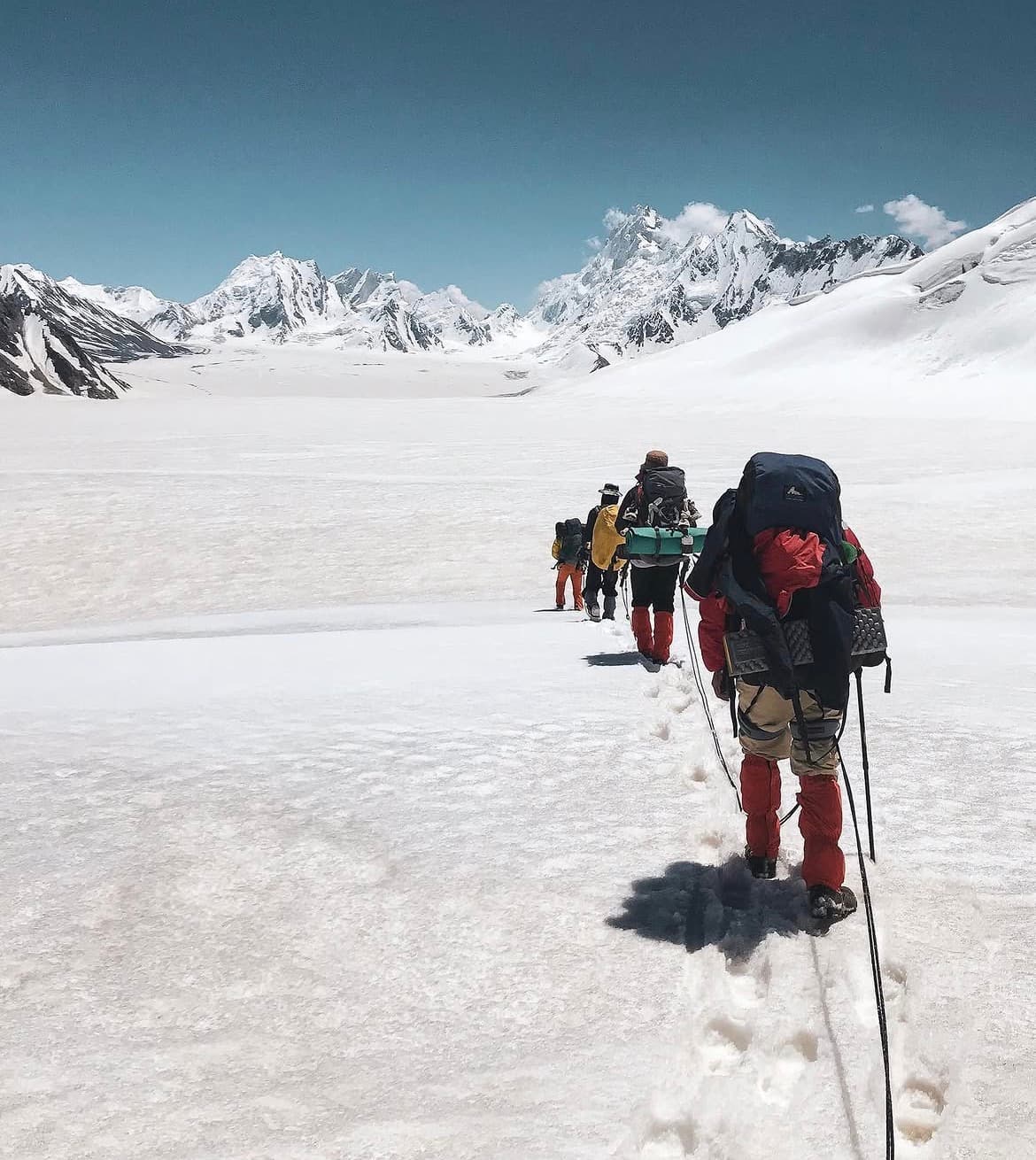
A 20-day Karakoram traverse linking the Biafo and Hispar glaciers across Snow Lake and the 5,150 m Hispar La.